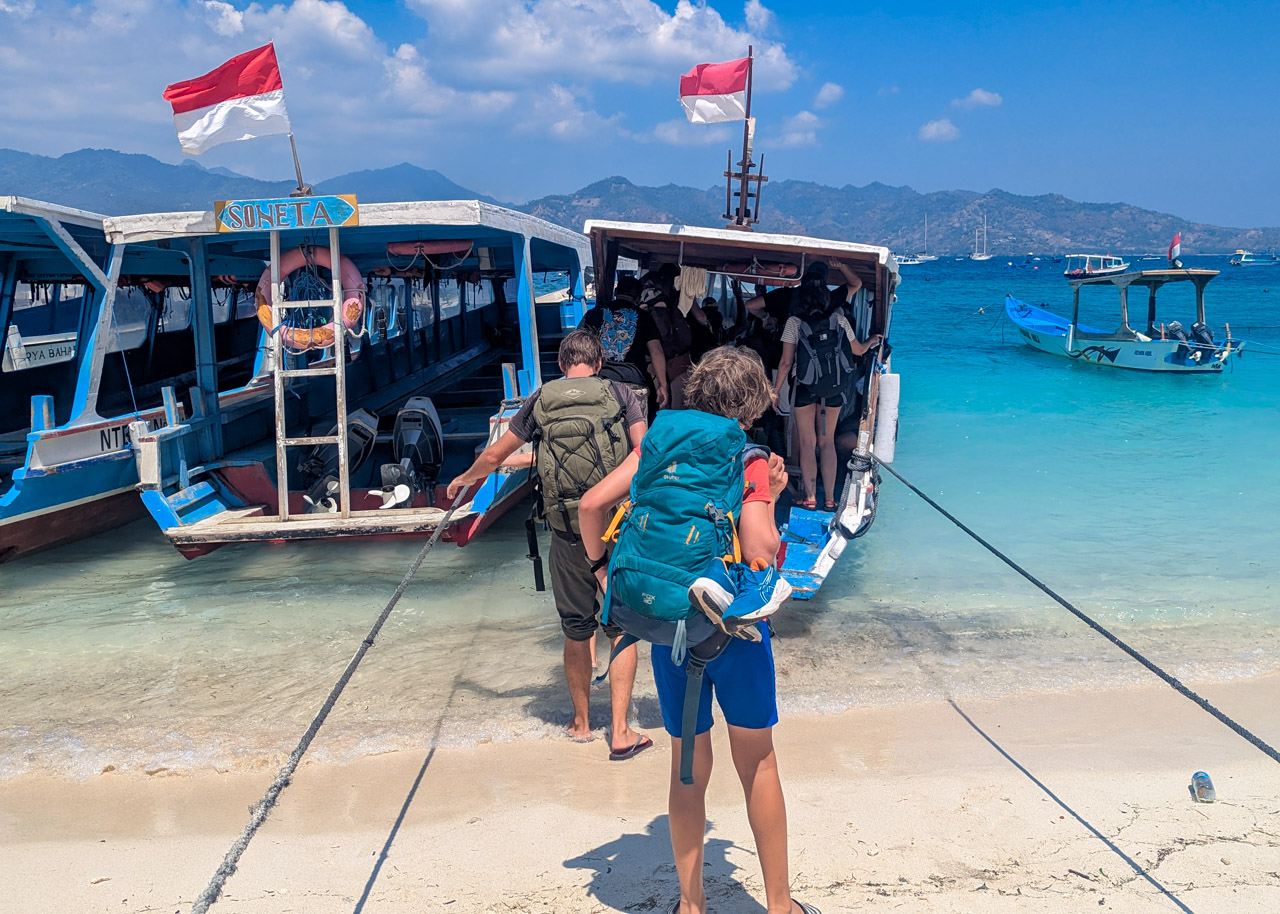
Gili Air is only a few kilometres from Lombok, but it soon becomes obvious that the pace of life is entirely different. It’s a much more relaxed and back-to-basics experience. After a disappointing week in Kuta on Lombok, we were apprehensive as our ferry approached Gili Air, unsure if this too would fail to live up to the hype.
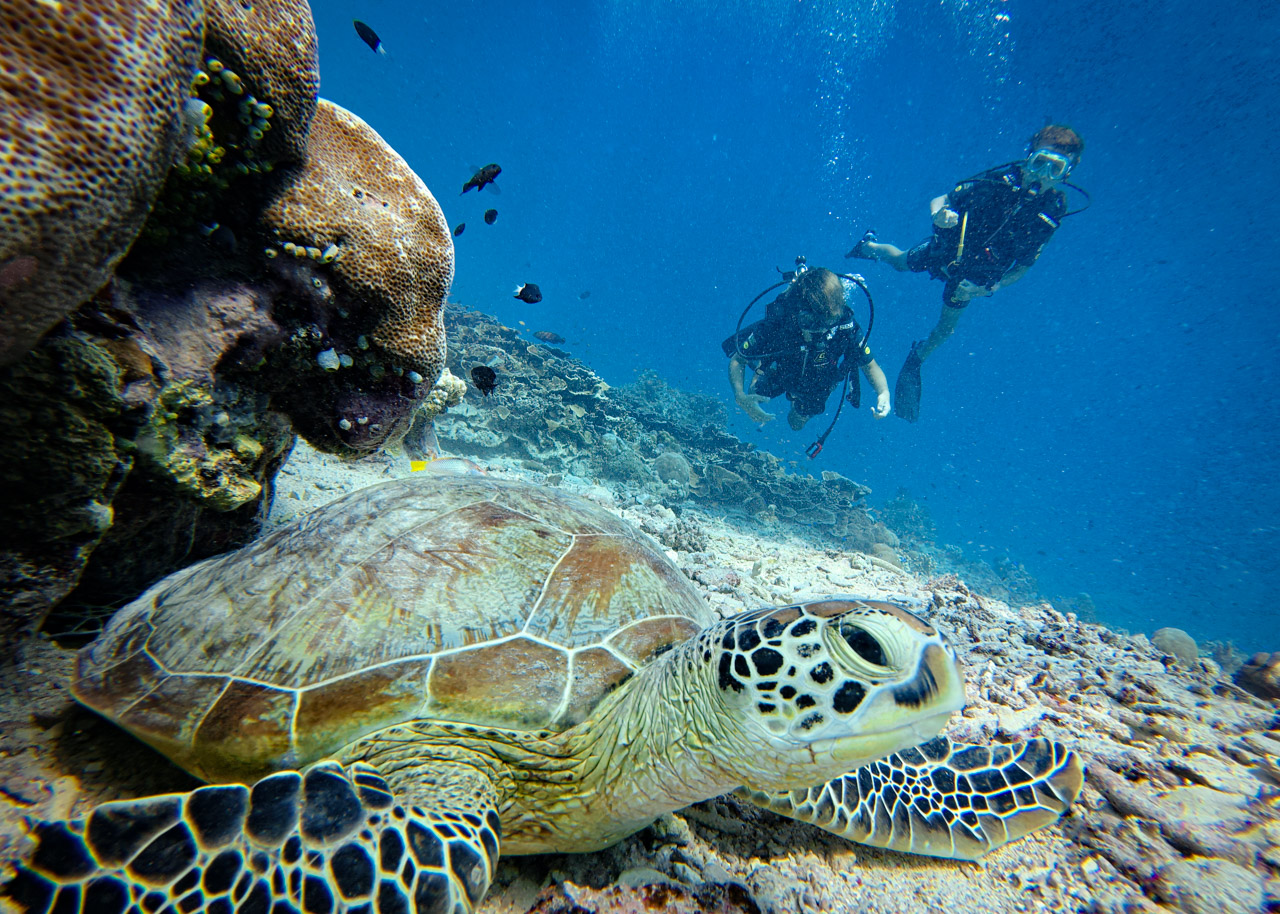
When we were planning this trip, Gili Air was the place everyone told us we should visit due to its diving opportunities (our boys aged 11+12 have their Junior Open Water qualification) and we didn’t really expect much else from the island. And while the diving was indeed excellent, it was the island itself that won our hearts and turned it into our favourite spot on the entire trip.
Even though we were visiting during peak season, the island seemed able to cope with the volume of tourists, and the lack of cars and mopeds added to the relaxed, tropical island feeling.

Getting to Gili Air
Amongst its many faults, Kuta has banned e-hailing apps (e.g. Grab and Gojek) so we had no choice but to arrange a tourist taxi to take us to the ferry port at the other side of the island. If you are coming from the airport or other parts of Lombok, you will be able to order a Grab as usual.
All tourists arrive to Gili Air by boat, whether that’s from Lombok’s Bangsal Port or from Bali. There’s a variety of boats to choose from to suit all budgets and timescales, ranging from slow public boats to private speedboats.
In the interests of research and saving money, we took the slow public boat from Bangsal. It’s less than 4km and takes around fifteen minutes, so there seemed little point paying extra for a private boat. In keeping with our Kuta experience, the port was full of people trying to rip tourists off, usually by claiming private boats are the public ferries or simply overcharging.
Booking tickets in advance helps if you plan to take a private or fast boat, but our advice is to take the slow public ferry that only costs IDR18,000 ($1). The trick on entering the port area is to ignore absolutely anyone who offers to help and instead head to the right-hand side near the beach. Here you’ll find a pink building with ‘Official ticket office, Bangsal to Gili Air’, from where you buy tickets using cash or QRIS.
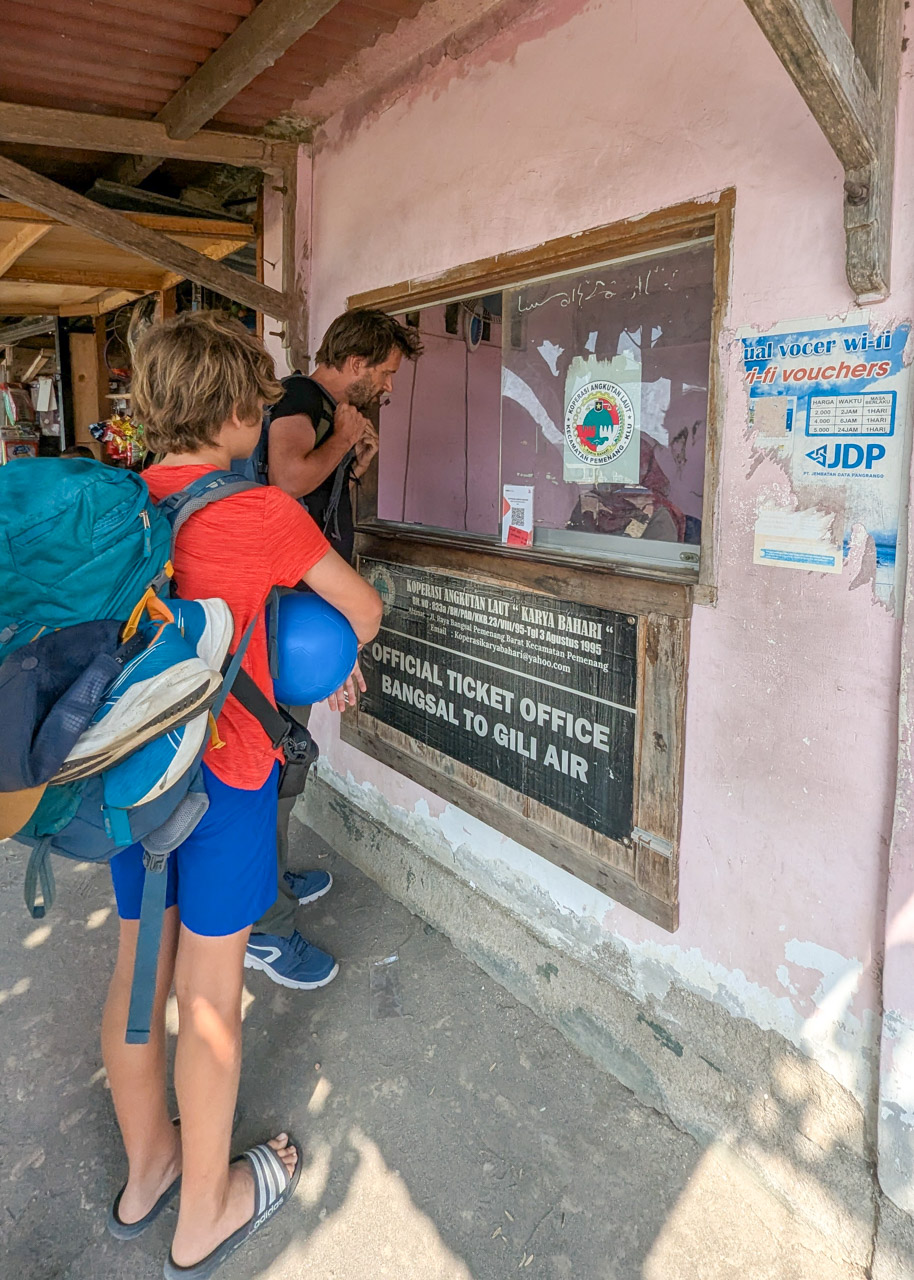
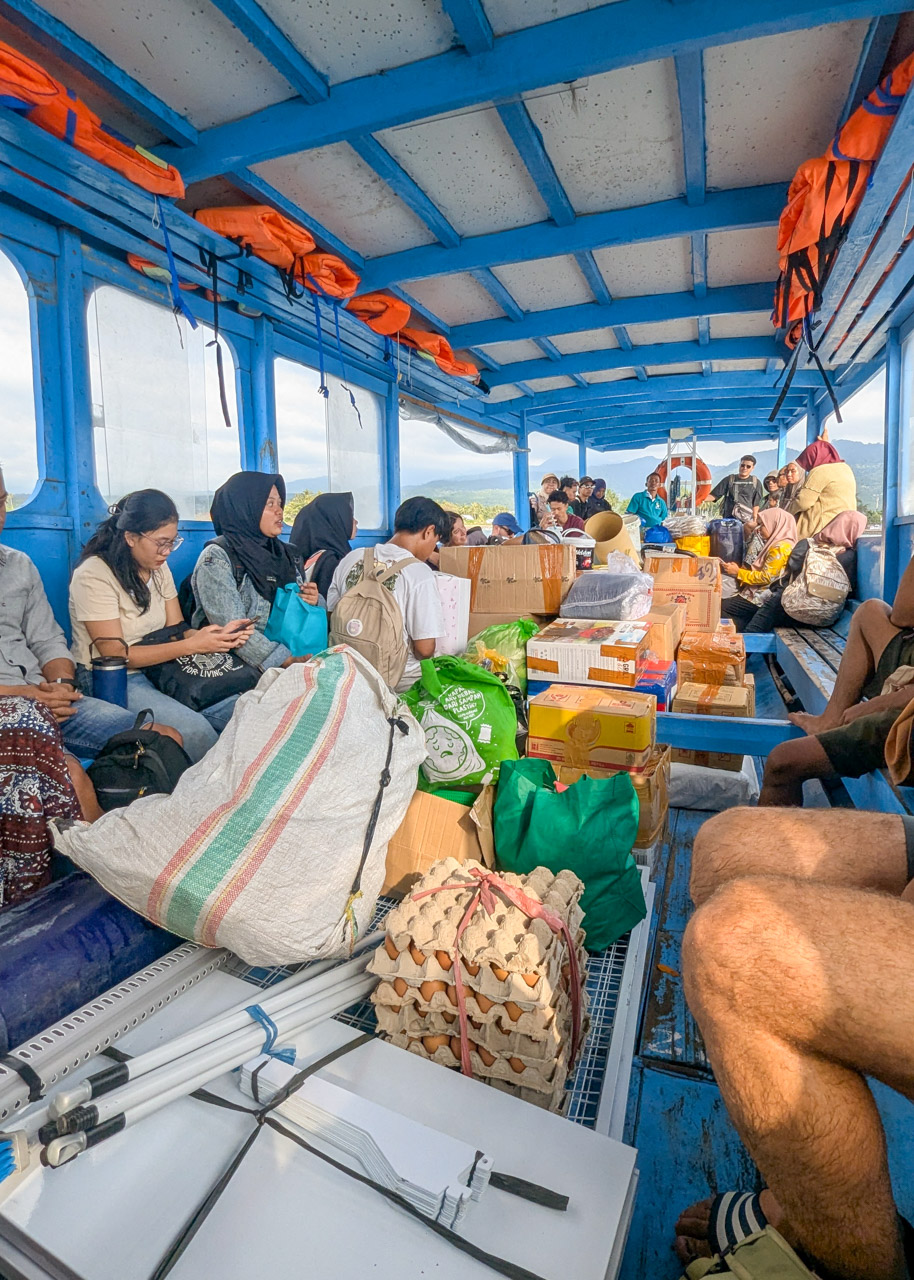
The only downside is that the boats wait until they’re full, around 40 passengers, before departing. Waiting time can therefore be up to an hour, although it’s often much shorter. The waiting area is a relaxed stretch of sand where all the touts, realising you’re no longer trying to buy tickets, will leave you alone.
If you’re coming from Bali, it’s a lot more geared towards private tourist boats, often booked as part of a package. For this much longer trip (three hours), it’s better to pay extra for a faster (and more comfortable) boat.
Getting around Gili Air
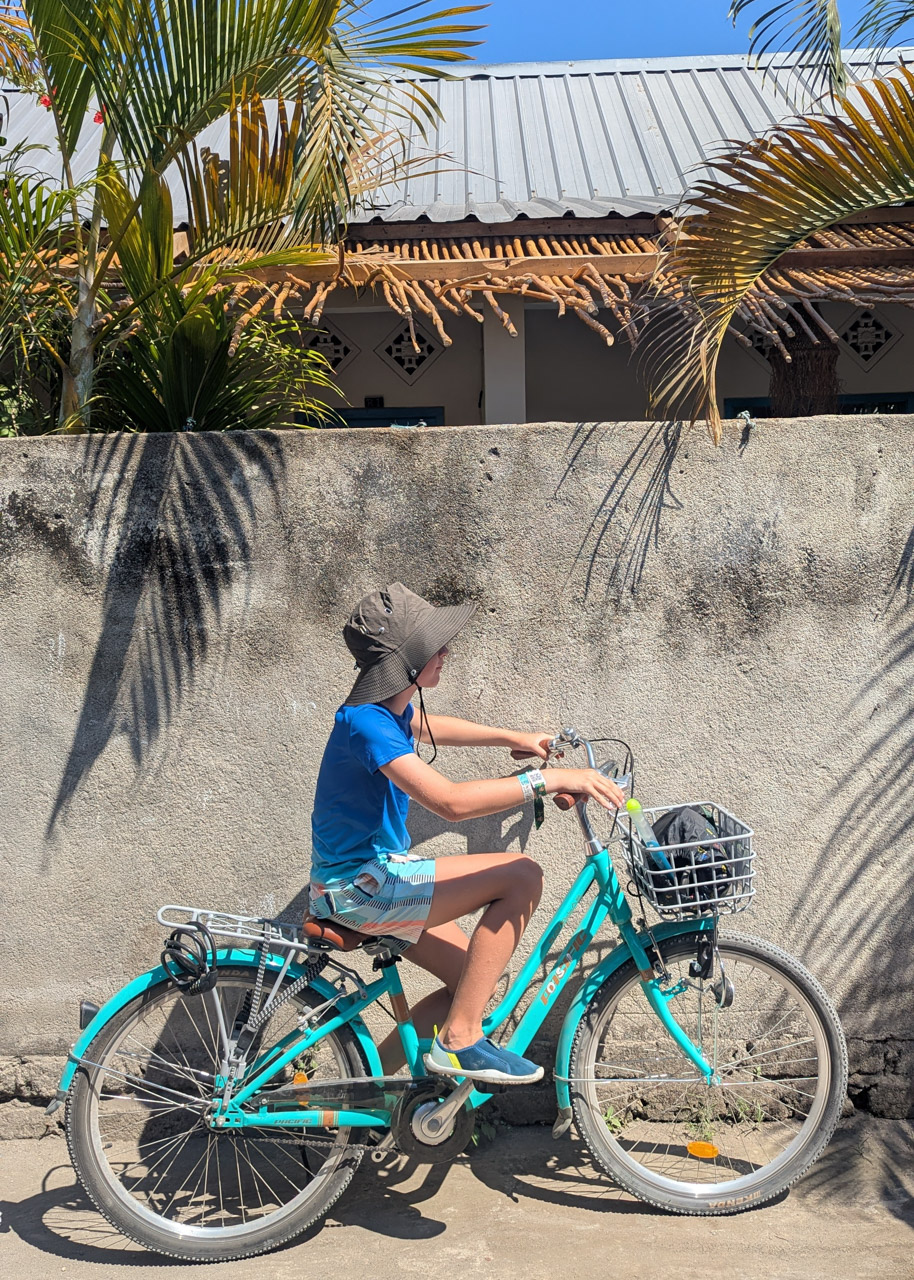
Our favourite part of Gili Air was the complete lack of motorised transport, aside from a few annoying e-scooters and rogue mopeds. Although many people do get around on foot, the island is just too big to comfortably walk around, plus you have to walk in single file on most of the roads to allow for passing bikes.
The best option is to hire a bike from one of the many rental shops around town who charge around IDR50,000 (£2) per bike per day. Aside from a few sandy sections, it’s easily the best way to get around the island and will save you plenty of time getting between your hotel and the beach. All bikes are fitted with a simple lock that you should use, however safe the island feels (locals are nothing to worry about, it’s the other tourists who are most likely to ‘borrow’ any unlocked bikes, unfortunately).
An increasing blight on the island are e-scooters that operate in a legal grey area. Depending who you speak to, their use is either entirely illegal, intended only for working locals, or permitted for people with mobility issues. They’re also putting additional pressure on the electricity supply of the tiny island. We also heard that the police make sporadic visits to the island to limit their use and fine people riding them.
How we spent our days
Gili Air earnt its place on our itinerary thanks to its superb scuba diving for families, so this became the focus of our days, with other activities fitting perfectly around them.
When we first began booking the trip, one dive centre told us they couldn’t take the boys. Because they can only dive to 12m, they need to be paired with other certified children. If there aren’t enough children joining the trip to make up a group of four, the dive centre would need to send a divemaster out with just our two boys, which isn’t financially worthwhile for them during high season. We eventually found a dive centre that was happy to take them.
Blue Marlin came to the rescue and confirmed they would happily take the boys out with their own divemaster. Unlike our diving experience earlier in the trip at Pramuka Island, non-divers (e.g. snorkelers or sunbathers) aren’t allowed on the boat; again, this is to maximise profits in high season and to prioritise accommodating divers (which is fair enough).
Do keep this in mind if you’re unsure about leaving your kids totally in the hands of the dive team. We embraced it and let the boys go off diving while we went for a massage, snorkel and some peace and quiet.
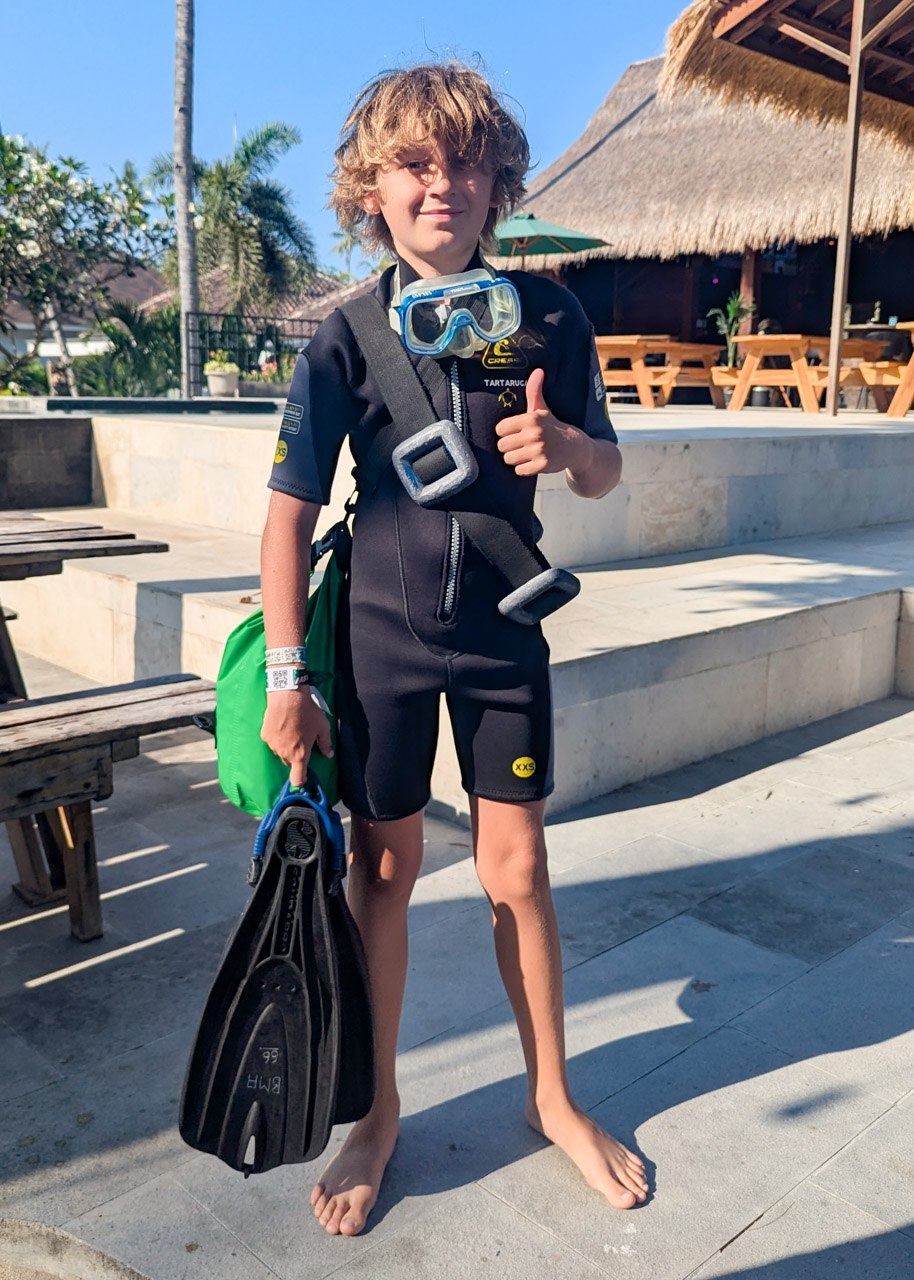
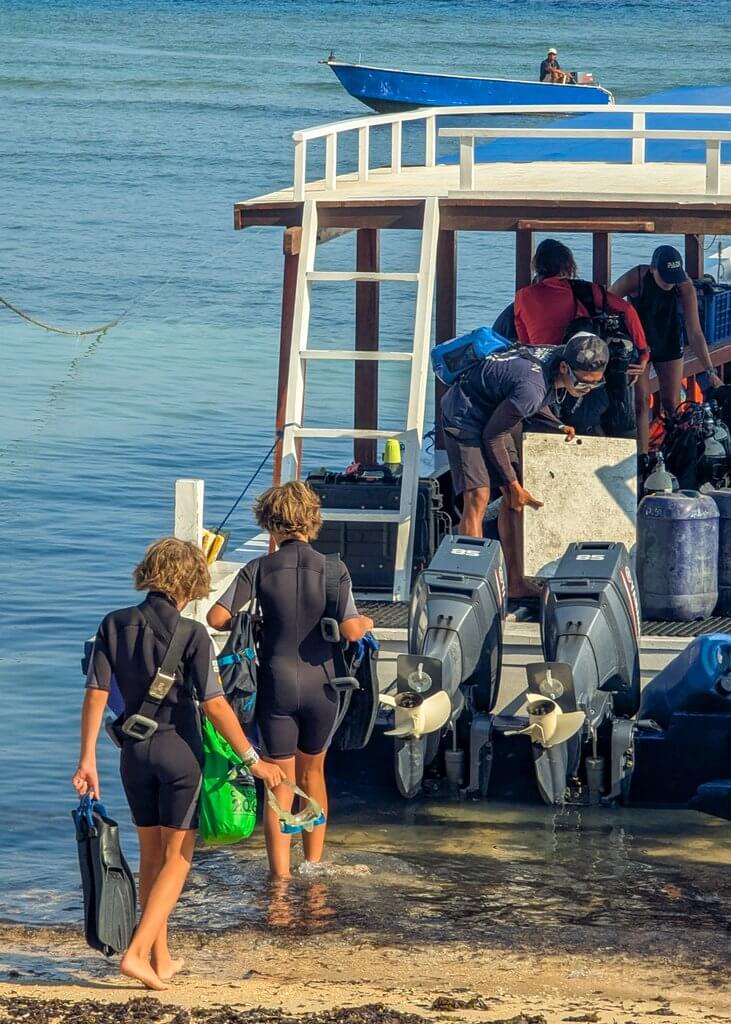

The boys’ diving schedule was a couple of dives per day with a break in between, so there was plenty of free time to explore the rest of the island.
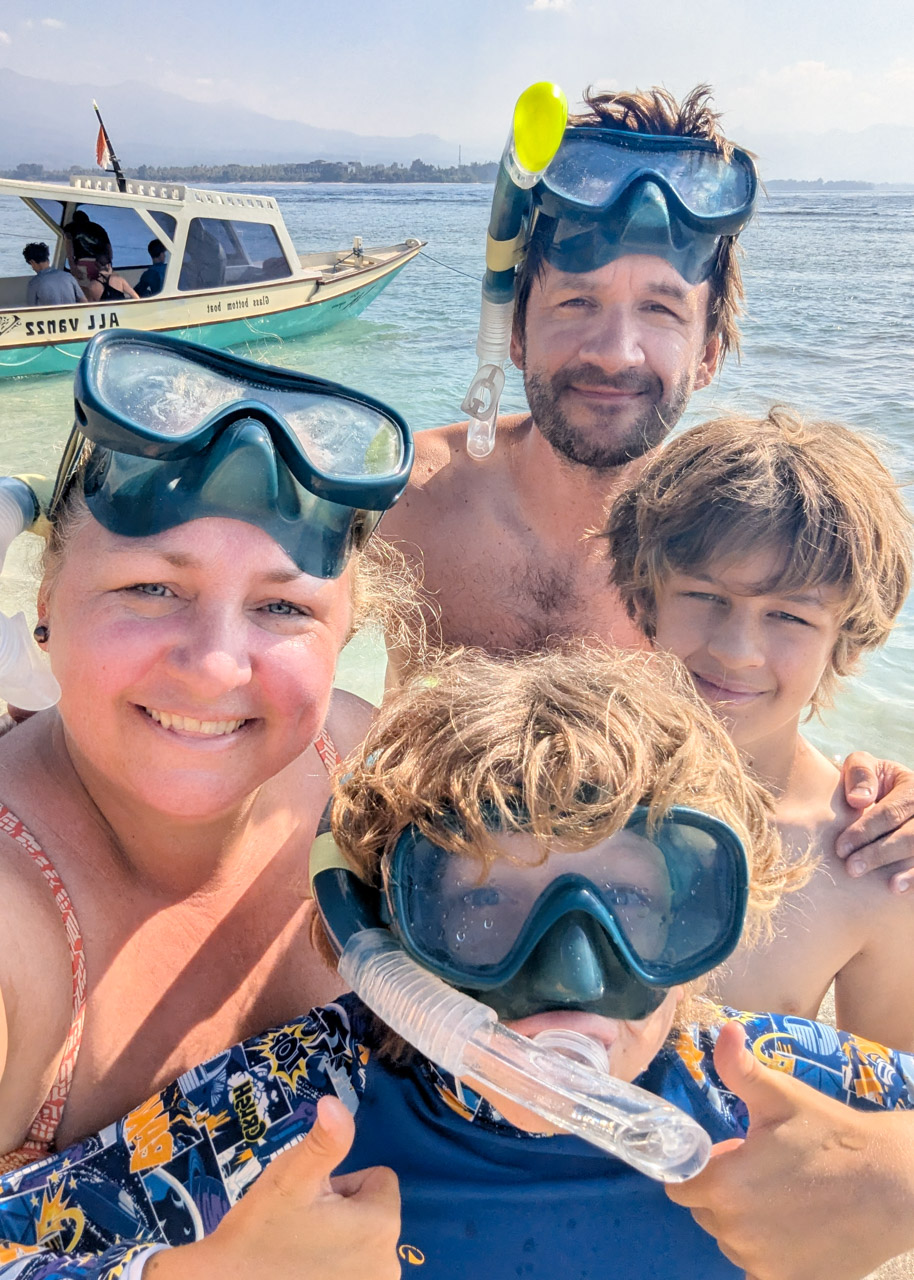
On mornings or afternoons when the boys weren’t diving, we went snorkelling with turtles straight off the beach, which was the best snorkelling experience any of us had ever had. The easiest way to reach the reef was to cycle to the east coast of the island, then wade out about fifty metres. From here you’re positioned directly over a huge drop-off, where all kinds of sea life float past, including the majestic turtles.
It’s an incredible place to snorkel and the current will push you gently along so there’s very little effort needed, although fins are a good idea if you want to swim against the current and stay longer at a safe distance from the turtles.
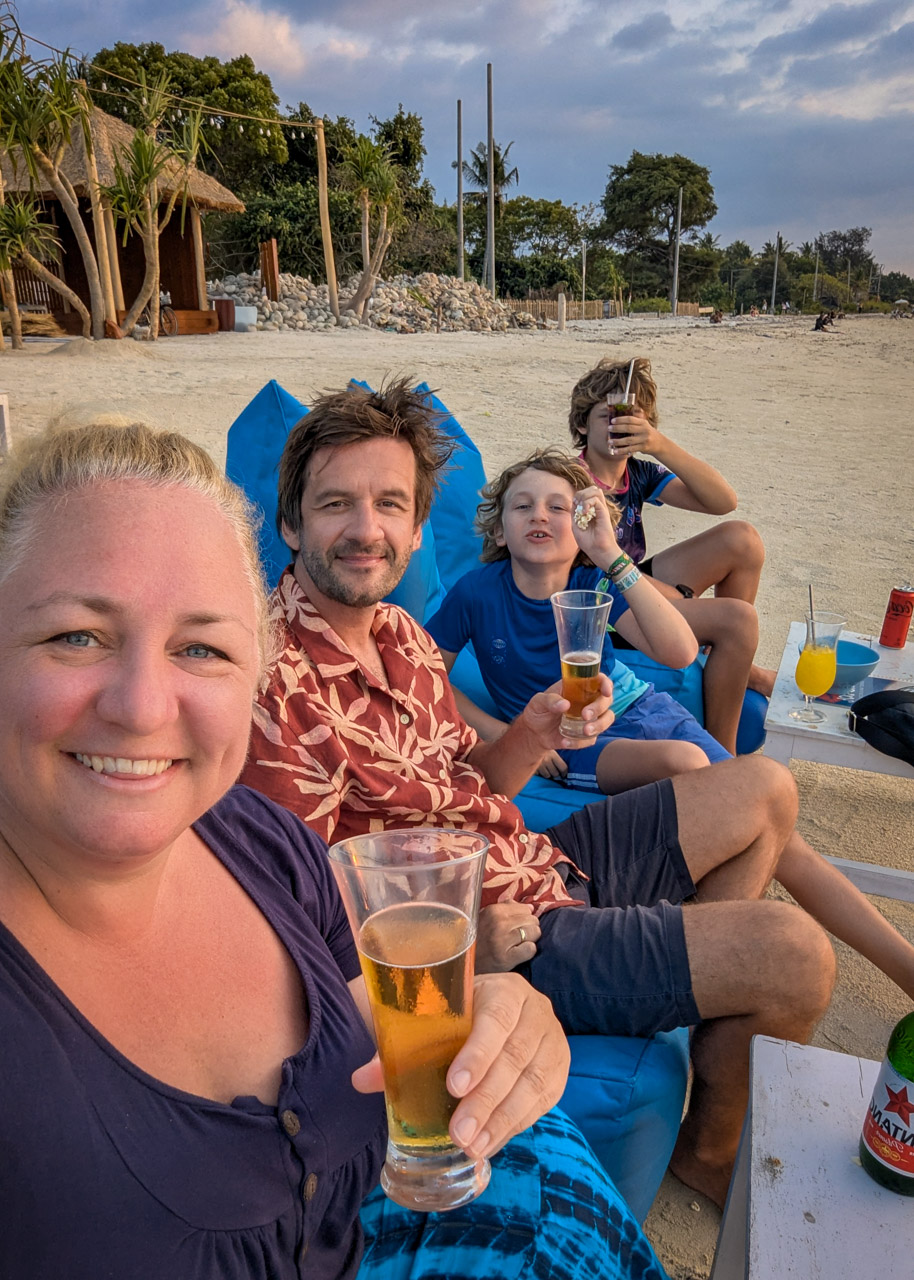

Evenings were an absolute treat on Gili Air, with the whole island pausing for sunset before drifting off to one of the beachside bars or restaurants. Our routine was to leave the hotel an hour before sunset, cycle to a bar on the west coast for the views, a sundowner and a game of football, and then cycle off to find a different place to eat for dinner.
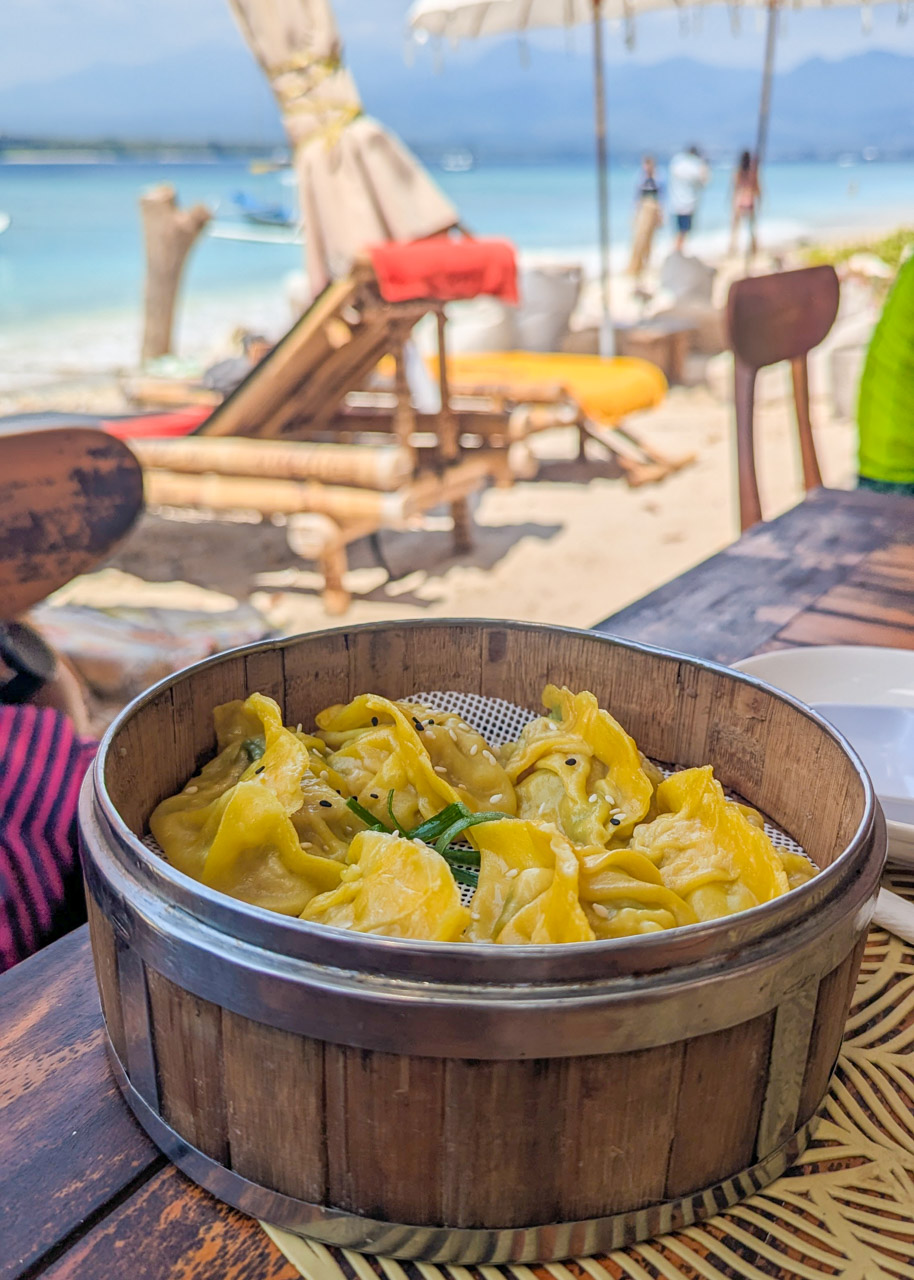
There’s an excellent mix of local warungs and international restaurants on Gili Air and it’s simple to find something all the family will enjoy. We ate at a few local restaurants close to our accommodation and, when we fancied a change, visited some of our favourite international restaurants including Mowie’s (European food but not your standard Western tourist grub), Life Kitchen Dumpling (for Taiwanese dumplings) and next door Maison Bliss (amazing crepes).
A special mention to Maison Bliss, which has a lovely owner and great food. It was also the place we used as a base for snorkelling on that side of the island to see the turtles.
Where we stayed
Gili Air has a limited supply of accommodation and it’s nearly always 100% full in the peak season. This relative lack of options is partly what helps keep tourist numbers down, but it does mean you need to be organised and book in advance. Don’t arrive in peak season without a booking and expect to easily find somewhere to stay.
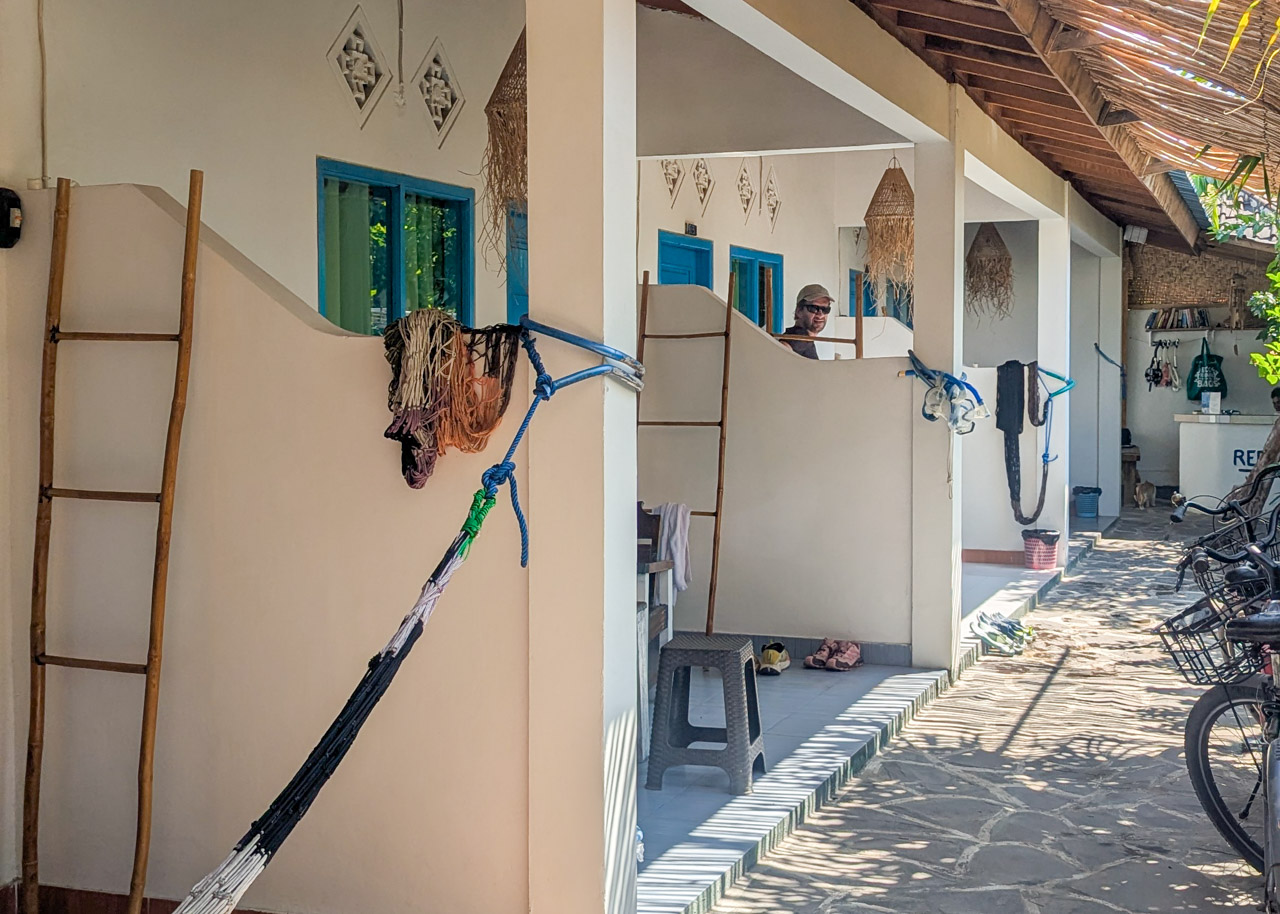
We chose Melbao Homestay, which is a friendly and no-frills option tucked away from the main walking areas. Although there are no family rooms, we arranged two double rooms next door to each other (one had a single mattress on the floor so the boys could have separate beds). Each had an en-suite open-air bathroom, air-conditioning, terrace area and hammock.
The homestay isn’t the most private place we’ve ever stayed at, the walkway you can see in the picture below runs directly alongside the rooms so you’ll have everyone walking past your hammock when they access their own room. It’s reasonably-priced and includes a decent (but limited) breakfast and staff are friendly.
Tips for visiting Gili Air with kids
- Book ahead – accommodation is limited and there are no big hotel chains here to take up the slack.
- Bring aqua shoes to protect your feet from the coral.
- Hire a bike to get around (around IDR50,000 per day). It’s easier to book for several days in a row so you can keep it overnight at your hotel, rather than re-hiring every morning.
- Use the local ferry from Lombok rather than an expensive private boat.
- Avoid hiring electric scooters. Local rules prohibit renting them to tourists, but they’re becoming increasingly common and a bit of a nuisance on the island.
- Tiny jellyfish are common in the water; their little stings are more annoying than painful but still not ideal. Long-sleeved rash vests are a good protection but don’t let them deter you from reaching the turtles.
- Credit cards and QRIS (e-wallet – Touch n Go works here for fellow expats in Malaysia) are accepted in most places, but it’s still handy to have some cash. There are a few ATMs on the island although most charge a fee and don’t seem entirely reliable.
Final thoughts
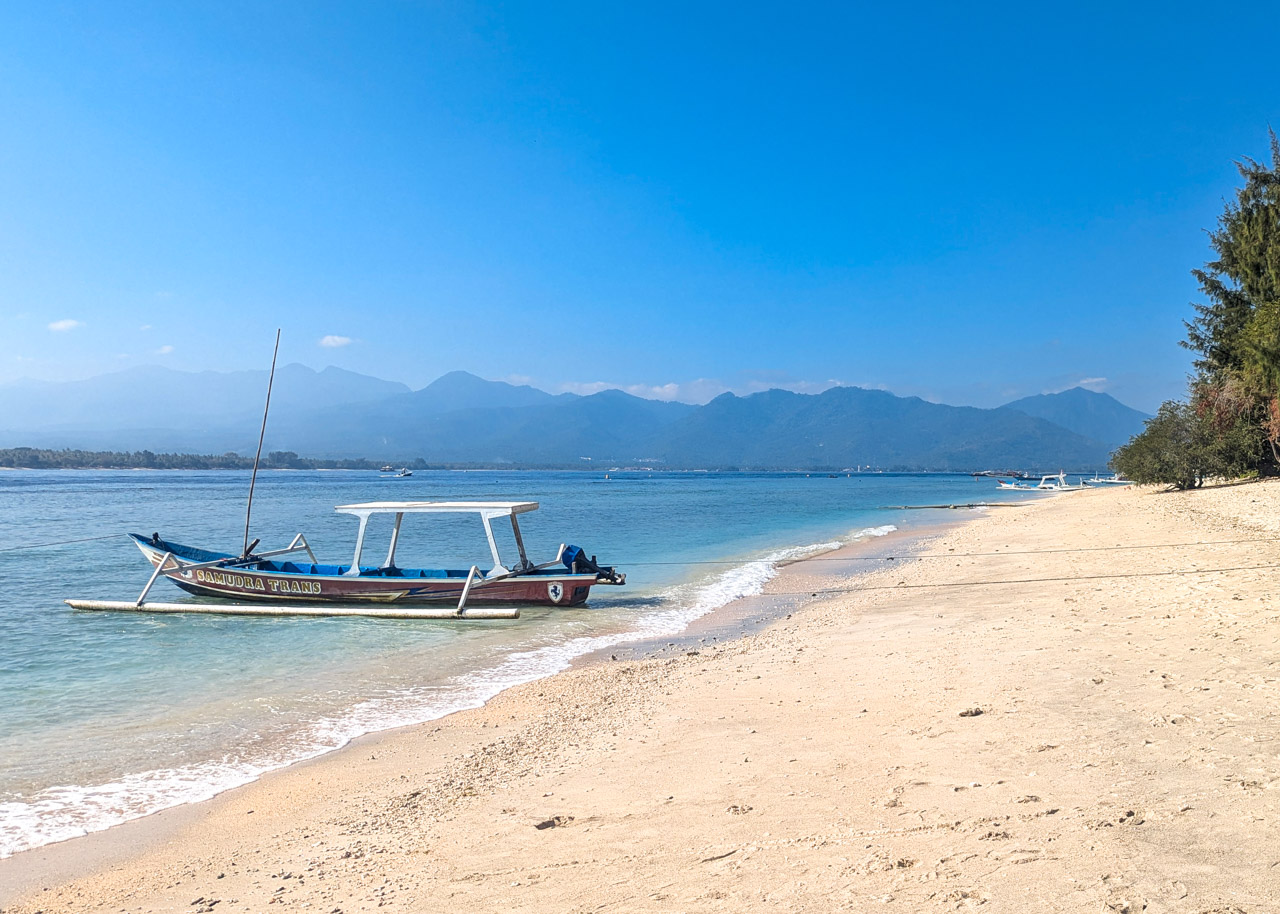
Gili Air was a complete success story on our Indonesian adventure and it’s definitely somewhere we’ll be coming back to. It would have been incredible if we’d only experienced the diving and snorkelling but it was the island itself that really impressed us.
Partly thanks to the lack of motorised transport and noise, it felt to us like a true tropical getaway, albeit one that everyone now knows about. Unlike some other islands in Southeast Asia, Gili Air seems to have worked out how to manage tourism for the benefit of both visitors and locals. If you’re looking for somewhere with excellent diving and snorkelling alongside a relaxed and welcoming tourism scene, Gili Air is hard to beat for a family trip.