

There are plenty of myths about what to expect when travelling with kids. Here we discuss the most common ones and explain why you’ve got nothing to worry about.
Travelling with kids can be a highlight of family life, full of memories, experiences and adventure. But it also comes with a long list of concerns and worries, often accentuated by online scare stories and unhelpful advice from friends and family.
We’ve encountered each of these common myths at one point or another during our travelling family life and, without exception, have confronted and debunked them all. So if you have your own concerns about travelling with kids and are in need of some reassurance, check out our advice below.
Myth #1: they won’t remember it
If you travel with kids for long enough (or even mention your intentions to enough people), you’ll eventually hear this phrase, usually muttered by a well-meaning passer-by. It’s particularly common if your kids are under the age of 5.
Our version happened when we were all stood transfixed by Victoria Falls in Zambia, both boys in our arms quietly enjoying the moment. A tour group walked past and a lady in her seventies patted me on the arm and confidently declared that the boys wouldn’t remember a thing about it!

The truth is that many childhood activities or experiences are eventually forgotten but that’s not the reason we do them in the first place. We don’t read books to our kids, or take them on play dates, or trips to the local park just because they’ll remember them in twenty years time.
Life is for living now and every single experience has the potential to make a tiny impact or impression on a child, helping them to grow and understand the world around them a little better.
Myth #2: they’ll miss their friends and routines too much
Kids are surprisingly adaptable, much more so than adults. Rest assured that while it’s natural for children to take comfort in routine and friends at home, they’re also be quick to find their feet on your travels.
The first few days can be bumpy, especially if jetlag is causing havoc, but once you settle into things, it’s amazing how quickly it becomes the new normal. Do remember that kids will still appreciate structure to their days, so try to establish routines on your travels, whether that’s a morning swim, the same place for breakfast, or regular family movie nights. You don’t have to change your whole routine just because you’re travelling overseas – sometimes a familiar fast-food meal or TV show can soothe any lingering homesickness.
Take any opportunity for them to make friends (but allow it to be as organic as possible, no-one likes to be forced to socialise). Local parks, worldschooling hubs and the swimming pools in large western hotels are good places to find new friends.

Myth #3: you’ll argue all the time
This one does depend on your usual day-to-day life and whether you’re the type of family to raise voices and argue, or if you follow a softer-softer approach to communication. The habits of a lifetime won’t suddenly change just because you’re on the other side of the world.
Home life has its own stresses and pressures that are often the catalyst for arguments. Once you’re away from home, some of these simply melt away. For other families, the first few days of a trip can be stressful and confusing, with arguments always brewing on the horizon.
But in general, travelling as a family doesn’t have to equal arguing, however scary it might feel to be spending all day every day with each other. Take your time to find your rhythm and realise that new experiences can sometimes lead to a few anxious moments.
Above all, remember that occasional arguments are a common part of family life and whatever happens, it’s always more fun arguing on a tropical beach than the local supermarket.
Myth #4: everyone will get ill
Many parents worry needlessly that their kids are going to struck down by illness on a trip, especially if it involves travel to developing regions of the world. These worries are usually centred around food poisoning, with many hours spent fretting about illness and strategies to stay healthy.
Although looking after your children is a natural instinct, as long as you take sensible precautions about where you eat, where you visit and how you get there, it’s highly unlikely you’ll experience anything worse than the occasional extended visit to the toilet.
With some obvious exceptions, restaurants and cafes are safe places to eat, as long as the food is moving quickly from the kitchen to your table, and it’s busy with other customers. Kids have pretty strong stomachs anyway, thanks to years of exposure to germs and snotty noses, so they’re more likely to fight off infections and viruses.
Myth #5: it will be too dangerous
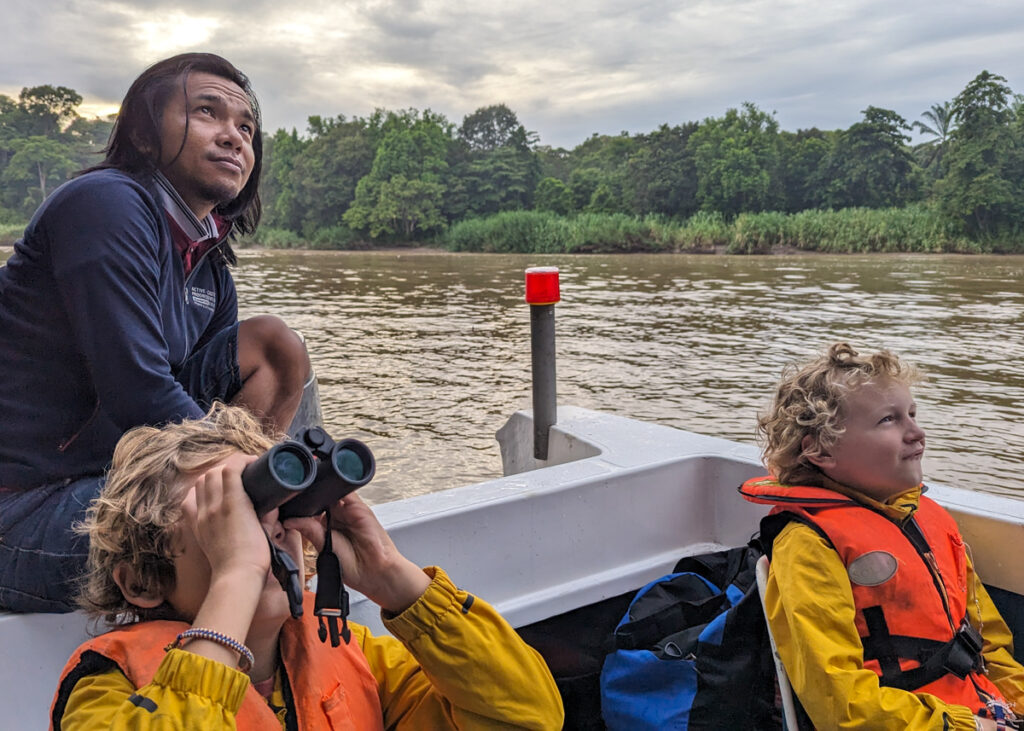
There’s nothing inherently dangerous about travelling with children, and the vast majority of the places you visit will be safe and friendly. In many countries across the world, kids are loved and treated with universal kindness by locals, who often go out of their way to make you all feel welcome.
In our experience, scam artists give families a wider berth than single travellers, who they see as easier targets. Many of the reported incidents involving tourists usually revolve around late nights and alcohol, which is unlikely to affect your average family.
Sensible precautions are advisable of course: do some research online about the places you’re visiting and whether there are neighbourhoods to avoid but don’t become paranoid. In all the time we’ve spent travelling as a family, there have only been a couple of occasions where we’ve felt even slightly concerned for our safety. In contrast, almost all our visits to large UK cities after dark have left us feeling uncomfortable.
Myth #6: the kids will become spoiled
Exposing your kids to nice places and enjoyable experiences doesn’t automatically mean they’ll become spoiled, privileged brats. On the contrary, travelling the world and seeing other cultures and people up close can help them appreciate their own lives back home and encourage empathy for others.
Some balance also helps and, unless you’re travelling on a huge budget, there’ll be plenty of cheap hotel rooms, overnight buses and packets of noodles along the way.
Travelling long-term is different to being on a constant holiday, it won’t be all about beach time and luxury hotels. If it’s done correctly, travelling with kids can be both an education and a stepping stone to them becoming informed, global citizens.

Myth #7: wait until they’re older
There’s never a perfect time to travel with children but many parents still have a nagging voice in their head telling them their kids are too young to appreciate it. Perhaps if we waited another couple of years, they’ll appreciate it more, or it’ll be easier, or they’ll get more out of it.
Ignore that nagging voice, now is the time to go. Life has a habit of getting in the way and blowing the best-laid plans out of the water.
As kids get older (e.g. beyond the tween years), their schedules become booked up with friends, activities, sporting matches and generally wanting to spend more time on their own as they find new levels of independence. Suddenly, an extended trip with their parents and siblings might not hold the same appeal it did a few years ago.
Younger kids are still (largely) under your control and are happier to follow a set itinerary. Plus, they still have that contagious sense of amazement and wonder at the world around them.

Myth #8: it will be too expensive
Travel is undoubtedly a privilege for a fortunate section of society but that doesn’t mean it’s prohibitively expensive or out of the reach of many families. With some thought and planning, it’s easy enough to travel on a budget.
Choosing where to travel is the most important factor in keeping costs down, much more so than how long you intend to travel for. Two weeks in Cambodia will be cheaper than two days in Singapore, and a ten-week Southeast Asia family adventure can be less than an all-inclusive splurge in Abu Dhabi for a fortnight.
When you’re on the road, look for Airbnbs rather than hotels, eat in local restaurants rather than western bars and embrace slow travel; nothing breaks the bank more than frequent flights and moving around every other day.
Finally, don’t lose sight of how expensive life can be back home; once you do your sums, the true cost will be a lot less than you might otherwise imagine.

Myth #9: they’ll need to be entertained 24/7, so parents will be broken
In the early years, school is as much about childcare as it is about learning. So it can be daunting to imagine travelling with your kids full-time and be needing to keep them entertained all day, every day. But travel days are different to days at home, and there’s always something or somewhere new to explore.
One week that might mean booking onto a diving trip or joining a multi-day river expedition. Elsewhere, you’ll have five days at the beach planned where the kids are free to run around, splash in the sea and perfect their sandcastle building skills. Whatever it might be, there’s always something to keep them entertained.
After the excitement and adrenaline-rush of exploring somewhere new, downtime will take on even more importance, with the busy days often leading to quieter evenings reading or watching a film together.
If you parents have been able to take some time off work while travelling, you’ll discover the added free time gives you more energy to ‘parent’, with more headspace to look after the kids than if you’ve just got back from a busy day at work.
You may also like to read:
10 benefits of family travel and why it’s important
Family travel on a budget: how to travel cheap with kids in tow
Favourite places to visit according to our kids