
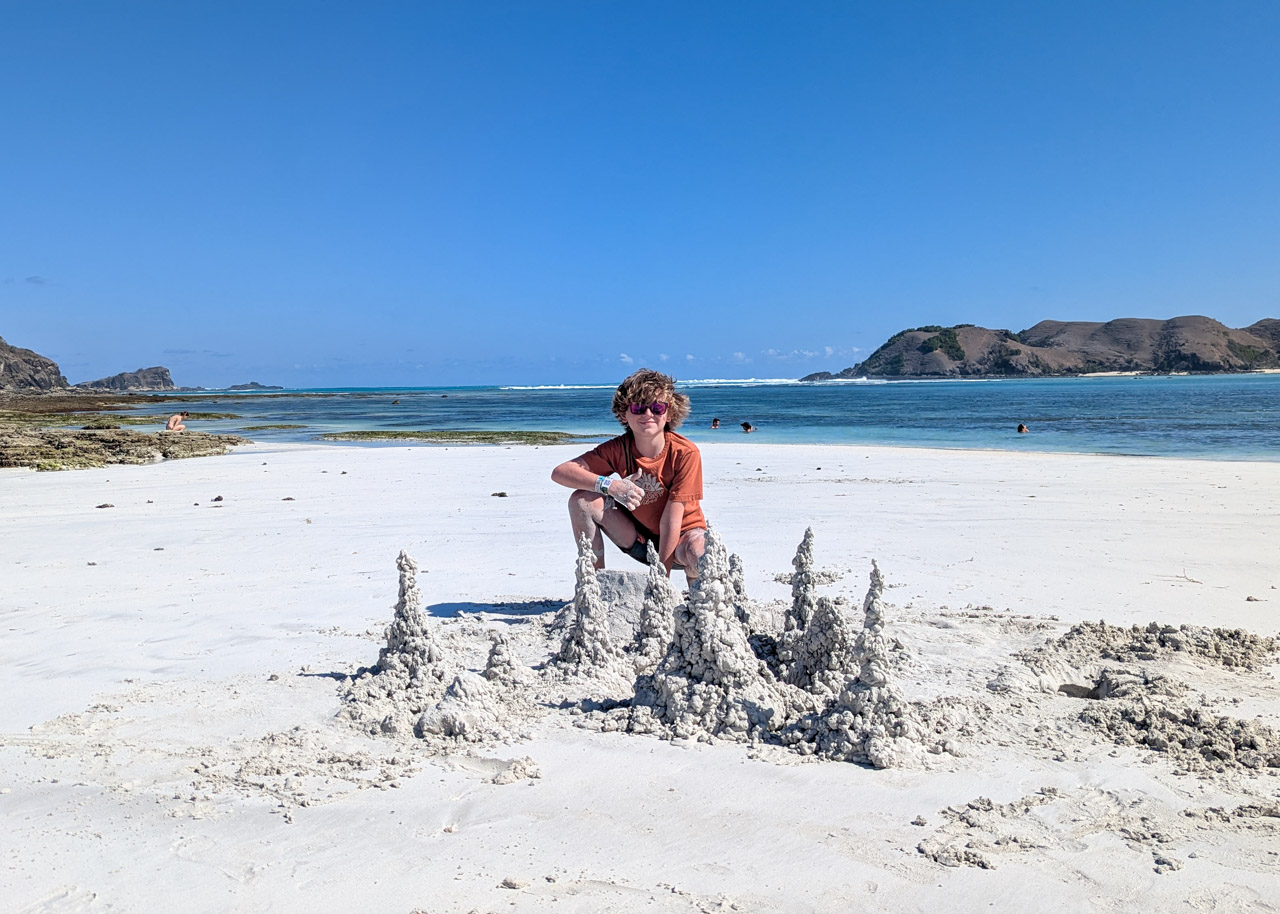
Kuta Lombok was one of those places we assumed we’d fall in love with. Social media is full of travelling families enjoying Kuta, so it seemed like an ideal stop towards the end of our six-week trip through Indonesia. If ever there was a place that didn’t match up to the hype, this was it.
We’ve travelled enough to know that you should never judge a place on arrival after a long travel day – especially when we’d taken the slow ferry from Bali. But from the moment our driver picked us up at Lembar ferry terminal, the whole vibe just felt off. Although the beaches surrounding Kuta are beautiful, albeit prone to crowds and isolated litter issues, the town itself feels overwhelmed and outmanoeuvred by the tourism boom. The photos you’ve seen of Kuta are probably of the nearby beaches but peel back the layers just a little, and you’ll soon discover a contrast with how the local communities are experiencing the effects of the tourism boom.
So after all that, is there any point in continuing to read our review? Is Kuta Lombok worth visiting with kids? Well, actually, yes it is, but only for the beaches and the surfing. If you’re coming to Lombok, we’d suggest you choose to stay elsewhere on the island, and these are our reasons why.
What is Kuta Lombok like?
The reason we keep writing ‘Kuta Lombok’ is because there’s another Kuta in Indonesia (in Bali) with a somewhat fearsome reputation: you either love it or you really, really hate it. Whenever we mentioned Kuta online, people usually assumed we meant the one in Bali. So for the avoidance of doubt, this post is about Kuta in Lombok.
There are similarities though, not least that both Kutas have suffered (or are about to suffer) the impact of mass-tourism. Hopefully Kuta Lombok will learn some lessons from its namesake and re-assess its development plans.
Kuta is a small tourist town in southern Lombok. Everything tourist-related in this part of the world is viewed through the lens of Bali, and Lombok is seen as the quieter alternative, where the pace of life is gentler and it’s still possible to witness the real Indonesia. Some of that is true, but not all of it.
It has a central tourist area filled with trendy restaurants, cafes, bars and accommodation. Most of the restaurants and bars have an expat vibe to them where smashed avocado is easier to find than nasi goreng. With each passing month, another warung or family-run restaurant is being replaced with a boutique cafe or pizzeria. The only upside of this for travelling families is that you’ll always find something the kids will recognise and enjoy eating, but you might not discover the local cuisine you were looking for.
It’s hard not to be struck by the contrast throughout the town, with traditional communities pushed either to the edges or less-desirable locations, yet still close enough to hear the boom-boom of club music or the clink of Bintang bottles until the early hours. In some parts of town, it’s only a couple of steps from one extreme to the other, and it can be confronting.
Everywhere you look there are signs of foreigners making money from the development boom, desperate not to miss out like they did in Bali (there’s even a poster from a real-estate company worded to this effect). As you leave town and head towards the beaches, plot after plot of countryside is being turned into hotels or villas, all with the same contemporary, minimalist look of boxy concrete buildings.
Kuta feels trapped between two stages of its lifecycle: no longer the relaxed beach town that made it so popular, but not yet far enough down the road of mature development and urban planning that will deliver positive effects for locals and tourists alike. Some of the locals have understandably decided they want a slice of the pie and look for ways to rip off tourists, something we didn’t experience anywhere else in the country. It’s not always a pleasant place to be as a family and some of the peaceful Indonesian hospitality we’d grown used to was missing here.
None of this is a reason not to visit. The town centre is fine for a few hours, but it’s worth knowing what to expect before you book two weeks here expecting paradise.
The downside: Kuta’s environmental and development issues
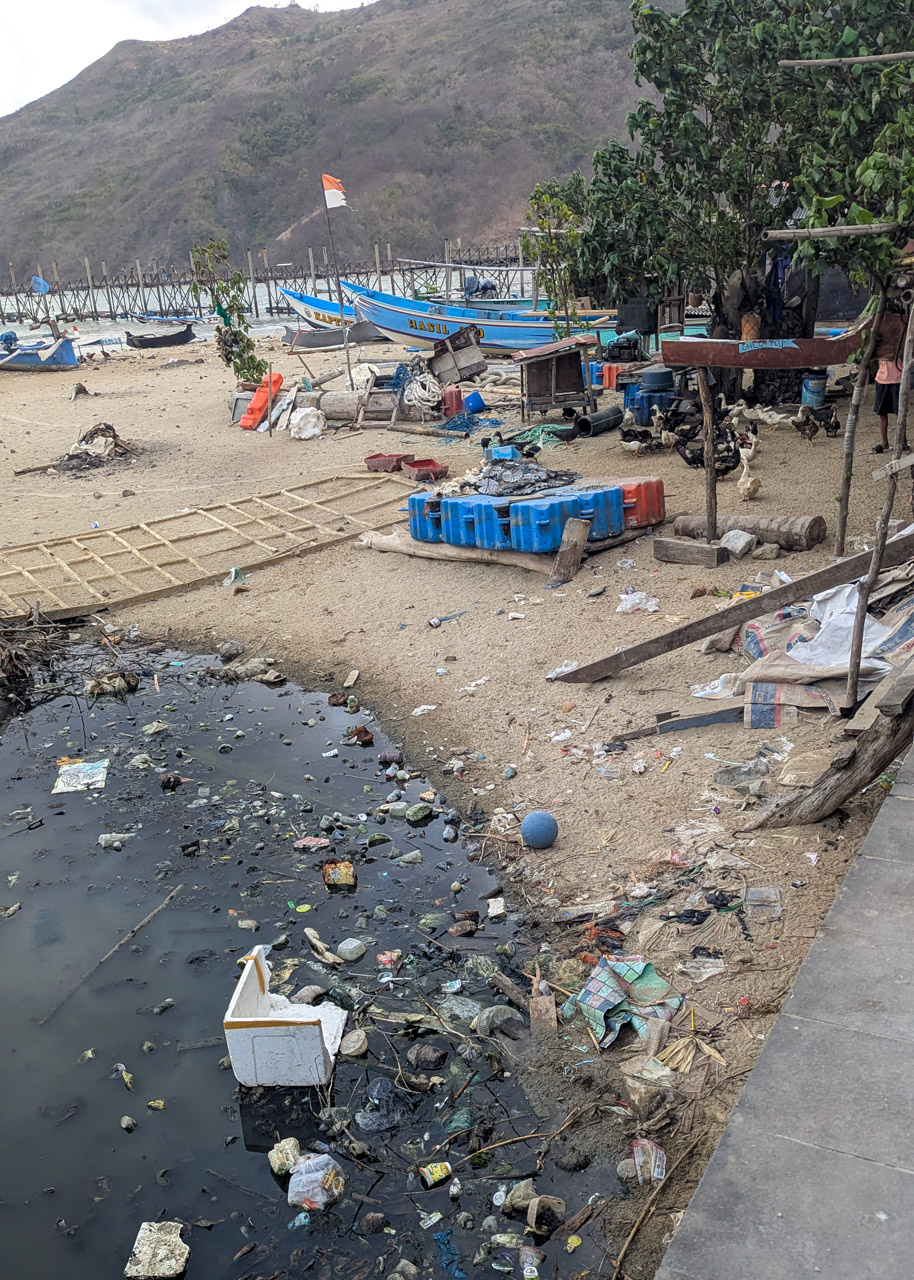
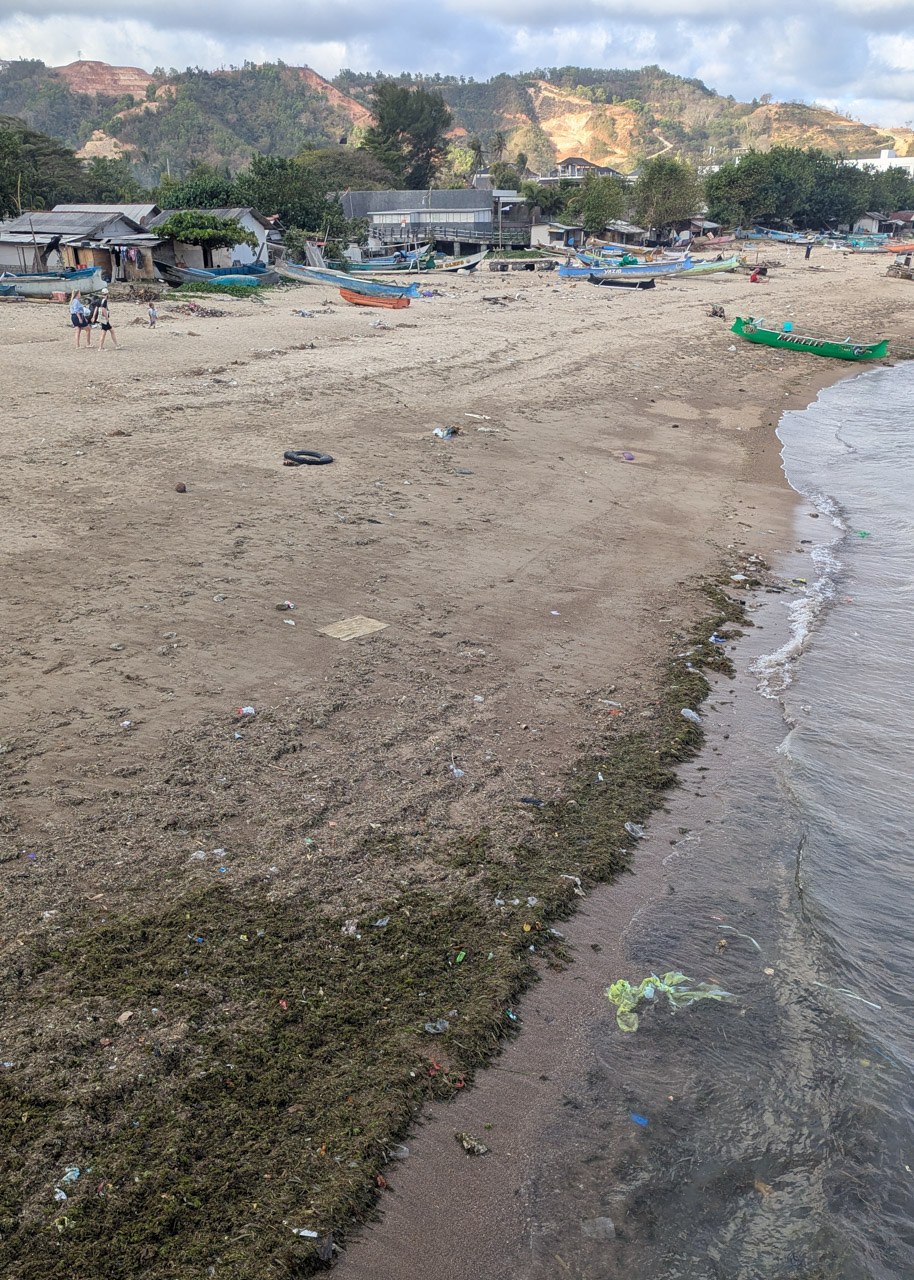
Kuta is struggling with the environmental impact of all the new development and the challenges that brings. Rubbish and plastic pollution is a real problem around town and the surrounding waterways. The main beach at the end of the tourist strip is bleak and full of waste, rubbish and other things you don’t want to get too close to. It’s quite a shock when you first visit, especially if you were expecting golden sand.
Despite their best efforts, the local community are fighting a losing battle against the rubbish that washes down from the town centre. Your kids might find it all a valuable worldschooling lesson on over-tourism and its effects.
The best beaches near Kuta Lombok
As you can probably already tell, the town of Kuta isn’t Lombok’s strongest card, and the best of the island is found some distance away. The beaches around Kuta are indeed beautiful and although they’re often busy, there’s always a space to lay a towel and enjoy the natural beauty. Most are a fifteen to thirty-minute ride away from Kuta, best reached by your own scooter or car. Local taxis are controlled by a group of touts who set prices and manage to keep Grab and Gojek at arm’s length.
Although all the beaches have natural beauty on their side, some of the less-visited ones suffer from trash and aren’t as attractive close-up as they might appear from the main road. The busier a beach, the cleaner it tends to be, although almost every stretch of sand will have some plastic on it somewhere.
Our two favourite beaches were Tanjung Aan and Selong Belanak. They offered a good compromise between facilities, location, cleanliness and natural beauty.
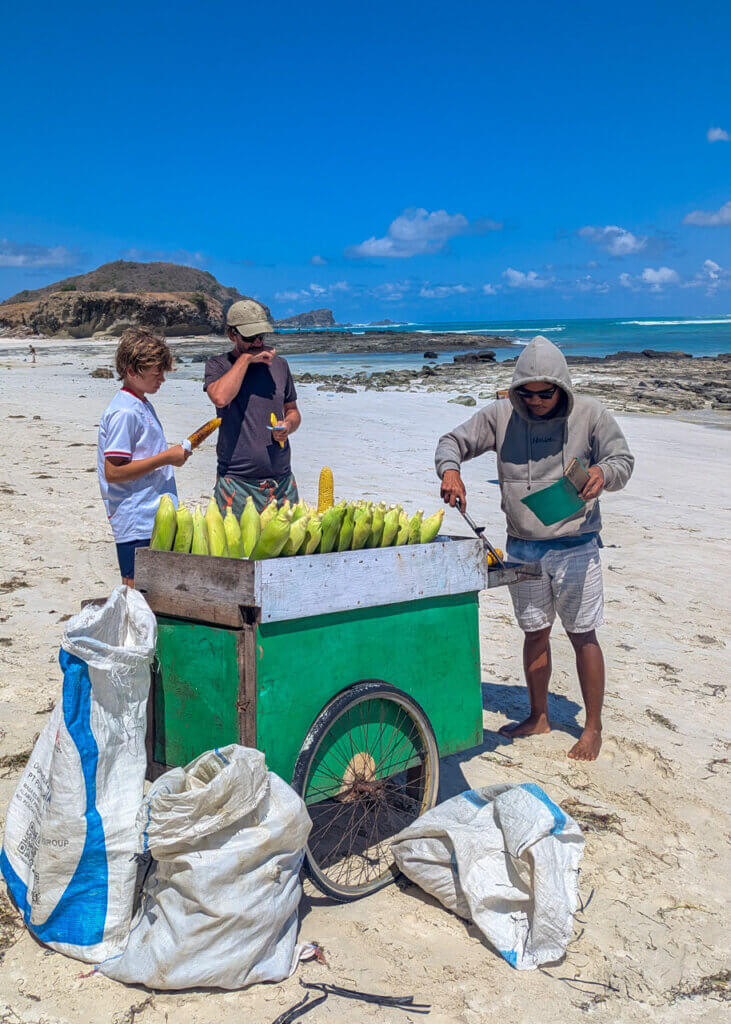
Surfing in Kuta Lombok with kids
As with our other experiences of Kuta, first impressions of surfing here were quite poor. We arrived at a crowded beach on a semi-organised tour we’d booked through our accommodation. After sitting around for a few minutes in a dark cafe, the boys were led out to the busy surf area and sent back and forth into the tiny waves (they had surfed previously) with very little in the way of instruction or effort from the ‘instructor’.
Although the lessons were supposed to last two hours, the boys came in thirty minutes early somewhat unimpressed. The owner of the surf school then tried to push us onto a group tour the next day, when we’d been promised a private trip. He ended up rudely asking us for an immediate cash payment and walked off muttering under his breath. Not a happy experience.
On our second attempt, we arrived to the beach independently and found a couple of surf instructors ourselves who were much more professional and friendly (plus a lot cheaper). The lesson we learned was to avoid tours booked through your accommodation and/or the guys who approach as you enter the beach. Instead, wander around for a while and find someone who looks trustworthy, friendly and professional. A good instructor makes all the difference when you’re here with kids.
Safety is an issue on the busy southern section of the beach, where all the surf schools congregate and battle one another for access to the intermittent waves. If possible, head to the northern end where it’s slightly quieter and you’ll have a much better time. Arriving early is also a good idea; it’ll be quieter in the water and slightly cooler for parents watching from the beach (there’s still a little patch of shade on the beach until around 11am).


Getting around Kuta Lombok
All e-hailing apps are banned in Kuta, including Grab and Gojek. This is a pity because it stops local people from earning some extra money on an ad-hoc basis and puts all the income into the pockets of the taxi touts who keep a tight rein on taxi business in the region.
As there are no local buses either, your only options are paying the inflated tourist taxi prices, or hiring your own car or scooter.
It’s an unwelcome throwback to ten years ago when taxi drivers ripped off tourists and charged whatever they thought they could get away with. Thanks to Grab and Gojek, we thought this was a thing of the past in Southeast Asia but it’s still a nuisance in Kuta and as a result, taxi fares are higher than almost anywhere else in the country. Negotiating taxi prices is just part of getting around the local area unfortunately.
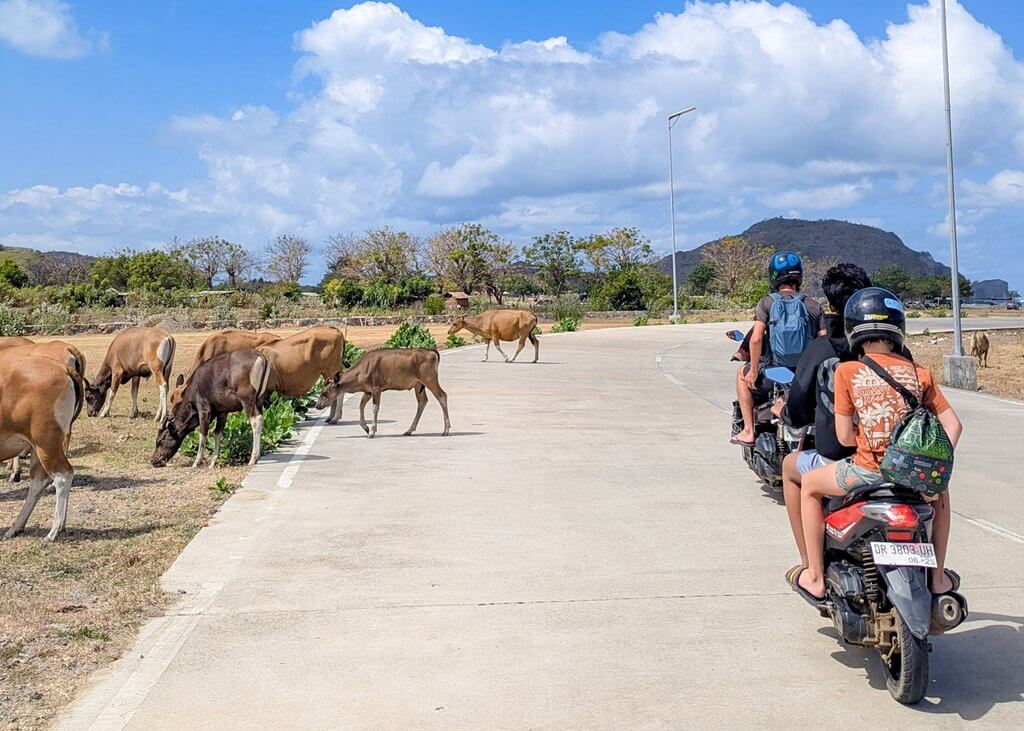
Car or scooter hire is a better option if you’re experienced but the winding and hilly roads around these parts aren’t the place to learn, especially if you have kids on the back. Make sure you have adequate insurance and be wary of inexperienced tourists who take too many risks and Indonesian drivers who have a relaxed interpretation of the highway code.
For a travelling family, the best option is probably to hire a car and use that to reach surrounding beaches and sights. Otherwise, a private driver is expensive but makes life much easier.
Where we stayed
Accommodation is quite expensive in Kuta and you don’t always get your money’s worth.
We stayed at Wave Inn, which was in a good location, just a short walk from the main tourist area. They don’t offer family rooms so we instead booked two rooms close to each other (but not quite next door – the hotel staff aren’t great at coordinating this and most other families were spread around the hotel as well).
Breakfast was surprisingly good – we very much recommend the pancakes. There’s also a small pool that’s a welcome retreat after a day at the beach.
How to get to and from Kuta Lombok
If you’re arriving from the Gilis or the airport, you can order a Grab to drop you in Kuta. From the Bali ferry, it’s best to organise a driver through your accommodation (we paid INR400,000). There is no local transport.
After your stay, there’s no easy way to leave Kuta that doesn’t involve the tourist taxis. Try your best to negotiate a decent rate and console yourself that you’ll be back on the Grab app soon.
Final thoughts
Kuta is a strange place and one that we won’t be rushing back to. If we were visiting Lombok again, we’d instead hire a car and stay near Selong Belanak, where you have access to the beach for surfing and are a safe distance from Kuta.
Kuta is a decent enough place to visit for a couple of hours, perhaps to use an ATM, grab a beer and have a Western meal, but once you’ve done that, you’ll probably be ready to leave. Most of the travelling families we spoke to, who travel in a similar way to us and visit similar destinations, seemed to feel the same.
Hopefully the lessons of Bali’s Kuta will be learned in Lombok, and the town will grow in a sustainable and manageable way, benefiting both locals and tourists. It’s readily apparent that change is coming to the area; only time will tell if it ends up being positive.