

Looking for a different way to explore Thailand with kids? This family-friendly itinerary through Bangkok, Ayutthaya and Kanchanaburi combines city energy, ancient temples and jungle adventure; a varied trip all within a few hours journey from Bangkok.
Thailand is a country we return to time and again as a family, most often for the island beaches and diving. But for this trip, we were keen to show our boys (aged 10 and 12) a different side of Thailand.
Over the years, we’ve created several Thailand itineraries on our site, reflecting just how varied travel here can be. These include a slower eastern route from Bangkok to Chanthaburi and Koh Chang (read that itinerary here), as well as a longer Thai island-hopping journey from Langkawi (Malaysia) up through the Andaman Sea to Phuket (read that itinerary here). Sometimes we simply visit one island for a week at a time, with Koh Lanta and Koh Lipe among our favourites.
But this itinerary is different. It focuses on train travel within a three-hour radius of Bangkok and offers fantastic variety; buzzing city life with VR and Muay Thai experiences, temple hopping, dark WWII history, and swimming in waterfalls and rivers in the jungle. Over nine days, the route travels from Bangkok to Ayutthaya to Kanchanaburi, before continuing further up the River Kwai to sleep in jungle rafts floating on the river.
Disclaimer: This post contains affiliate links. If you click to purchase, it is at no additional cost to you, and I receive a small commission.

Travelling around by train
Thailand is a wonderful country for train travel and many mainland tourist destinations are on the railway network, including the places we visited on this trip.
We arrived into Thailand on the sleeper train from Malaysia (which can be booked via Baolau several months in advance) but all the other trains we used can only be booked at the station on the day of travel (from two hours before departure).
So for the trips to Ayutthaya and Kanchanaburi, you simply head to the ticket office when you arrive at the station and buy your tickets (cash only). As these are local trains, only third-class tickets are available, but the atmospheric carriages offer a hugely memorable (if slightly uncomfortable) experience.


Day 1-3: Bangkok
Where we stayed: Tara Place Hotel Bangkok – a family room with a double and two singles
READ OUR GUIDE: Visiting Bangkok with kids
We’ve visited Bangkok many times as a family, and each trip still brings something new to experience. Below, we share what we did on this visit. However, if it’s your first time, it’s worth reading our full guide to things to do in Bangkok with kids for a broader overview. We find that two full days is usually enough; just enough time to enjoy the city without feeling overwhelmed, as Bangkok can be busy, loud, and chaotic.
Day 1: Wat Saket, canals and Khao San Road
After arriving at 9.05am in Bangkok on the sleeper train from Malaysia, we dropped our bags at our accommodation and grabbed breakfast along Rambuttri Road.
Refuelled and ready to explore, we knew it was best to fit in a temple visit sooner rather than later. We’ve visited several temples in Bangkok over the years and were looking for something a little different, so we headed to Wat Saket (Golden Mount). A steady, manageable climb along shaded paths is rewarded with wide views across the city (the breeze at the top was very much appreciated).


Still chasing a breeze (April in Bangkok is hot), we then took a longtail boat ride through the Thonburi canals from Tha Chang Pier. This is one of the best introductions to the city, revealing a quieter, more traditional side of Bangkok, where life still unfolds along the waterways. Avoid booking from Phra Arthit Pier near Rambuttri and Khao San, where prices are inflated. At Tha Chang Pier, you’ll be directed to the booking desk where you can pay directly.
This is far from the cheapest Bangkok activity, and you’ll likely be quoted a high starting price. We negotiated the fare down to THB2,500 for a one-hour private boat ride for our family of four. There is no need to book in advance; simply turn up, ask for a canal trip, and negotiate the price.

In the evening, we soaked up the energy of Khao San Road before enjoying dinner along the quieter Rambuttri Road, which runs parallel to it.
Day 2: Muay Thai, VR fun and fight night
READ OUR GUIDE: Watching a Muay Thai fight at Bangkok’s Rajadamnern Stadium with kids
Our second day in Bangkok swayed more towards the boys’ interests (family travel is always about balance).
We started the morning with a Muay Thai training session at Sangmorakot Muaythai Academy. The boys take regular classes back in Penang (where we live), and we always try and find a Muay Thai class for them when we travel to Thailand. We pre-booked via WhatsApp and it was a brilliant session.

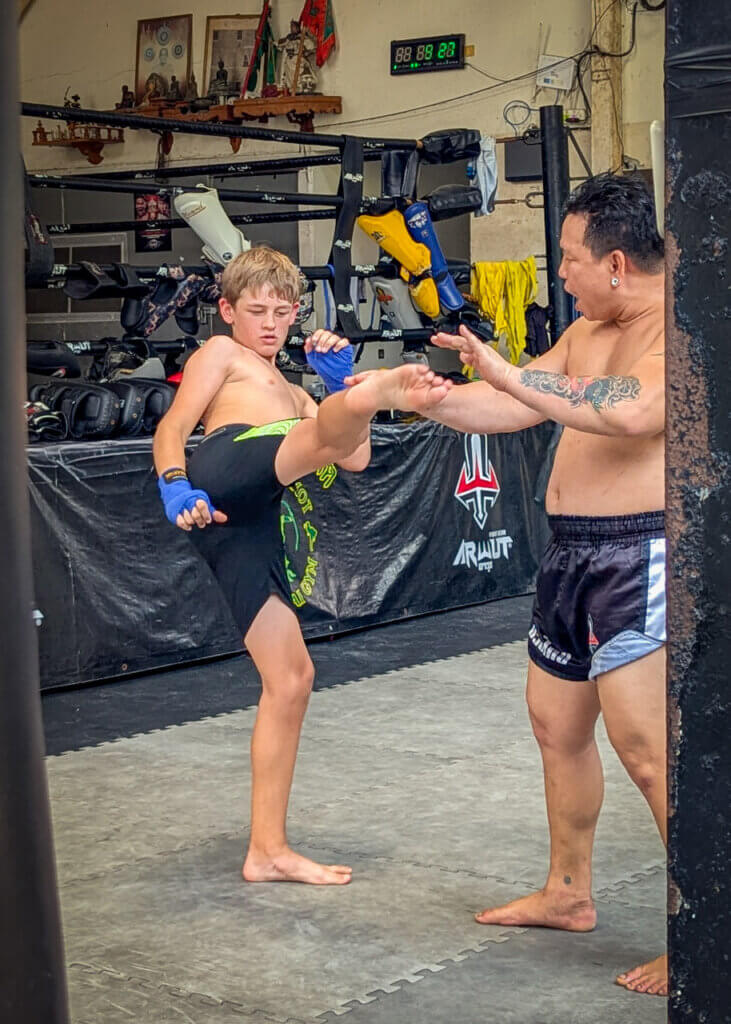
Afterwards, we headed in a Grab to Big C Supercenter for lunch at the food court and then ventured up to the 6th floor for our pre-booked hour at VR Fun House. This is a small collection of VR games and experiences, which got a big thumbs up from both of the boys.


After a short rest back at our accommodation, we rounded off the day with a live fight night at Rajadamnern Stadium. These events often sell out, so it’s worth booking tickets online in advance. However, learn from our mistake when choosing seats. Our original seats had an obstructed view of the corner of the ring, with large speakers and the TV crew blocking much of the action. We were able to move higher up, with a clearer view facing one of the flat sides of the ring, which made a big difference.
Food and drinks are available throughout the evening, with staff coming to your seat to take orders. However, from around 8:30pm the atmosphere noticeably shifts. Drinking games begin, the crowd becomes rowdier, and the focus feels more geared towards tourists looking for a party rather than the sport itself. There were very few locals in attendance, and at times there seemed to be little respect shown to the fighters. We had arrived at 5:30pm, enjoyed the earlier bouts, and by that point felt ready to leave.
READ: Watching a Muay Thai fight at Bangkok’s Rajadamnern Stadium with kids

Day 3: Ayutthaya
READ OUR GUIDE: Visiting Ayyuthaya with kids
From Bangkok, we took the 10:15am train from Hua Lamphong Station to Ayutthaya for a temple-hopping day trip. We bought our tickets at the station. The total cost for the four of us was just THB53 (£1.22). The journey took around two hours.
READ: How to get from Bangkok to Ayutthaya by train
On arrival at Ayutthaya station, we hired a tuk-tuk to take us around the main temple loop, including Wat Mahathat, Wat Ratchaburana, and Wat Phra Si Sanphet. In reality, we simply followed our driver’s recommendations on where to stop, which worked well and kept the day easy and flexible. This cost THB900 for around three to four hours, which felt like the right amount of time.
It was extremely hot, so we made the most of every opportunity for a cold drink or ice cream. We also let the boys take their phones, and they enjoyed taking photos and videos, as well as listening to music while we explored the ruins.
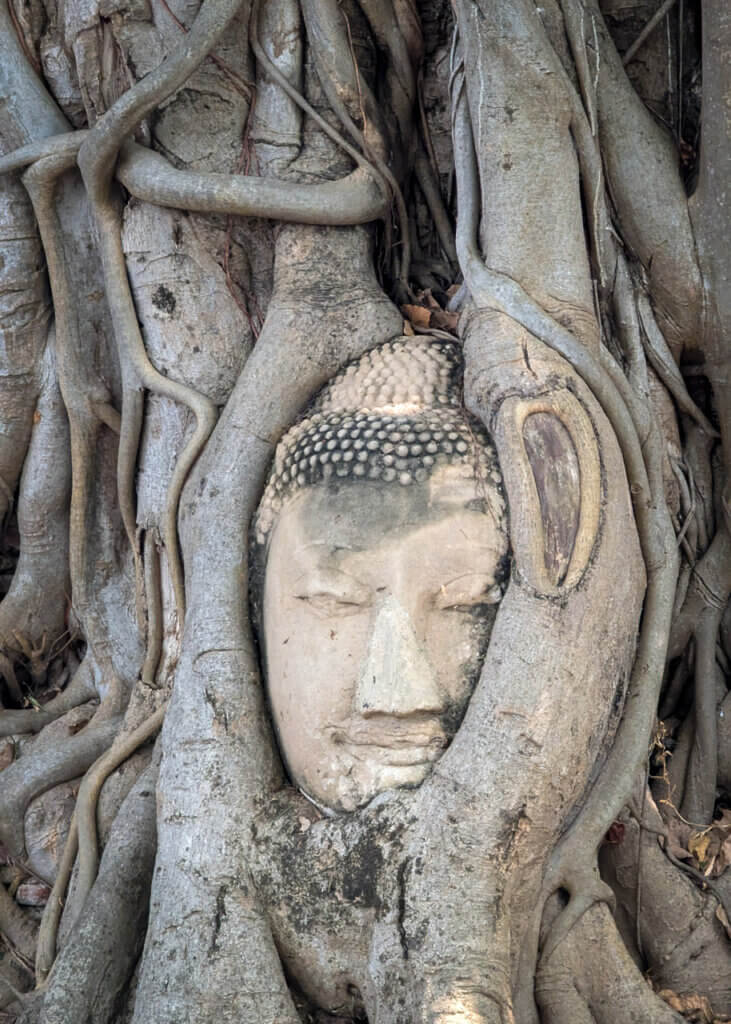
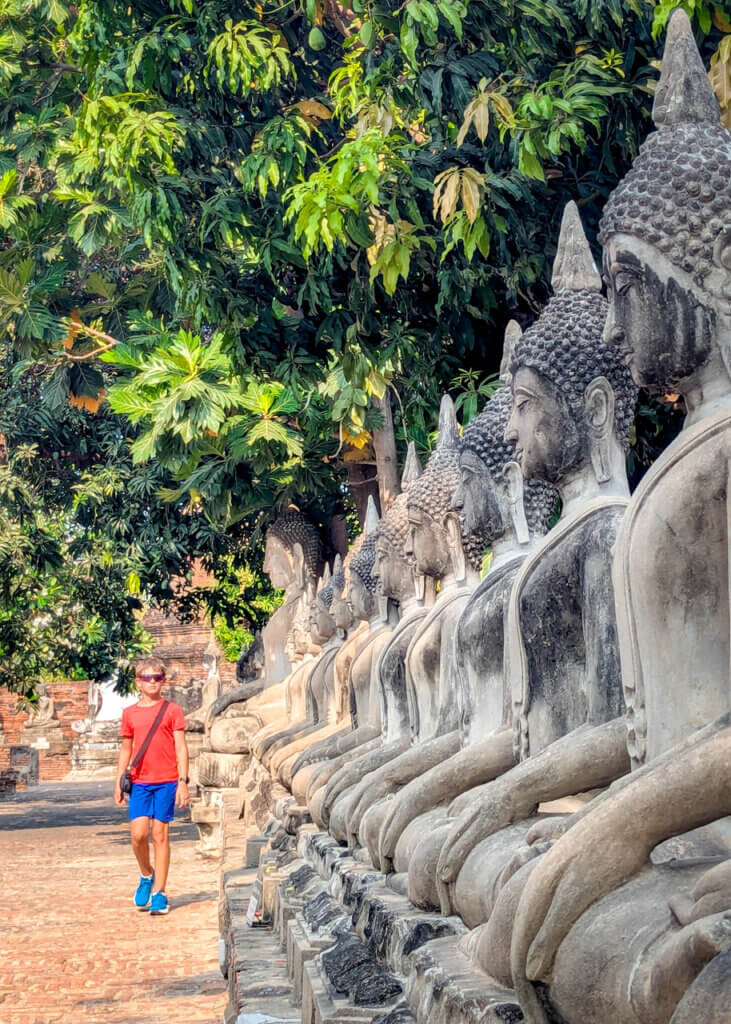
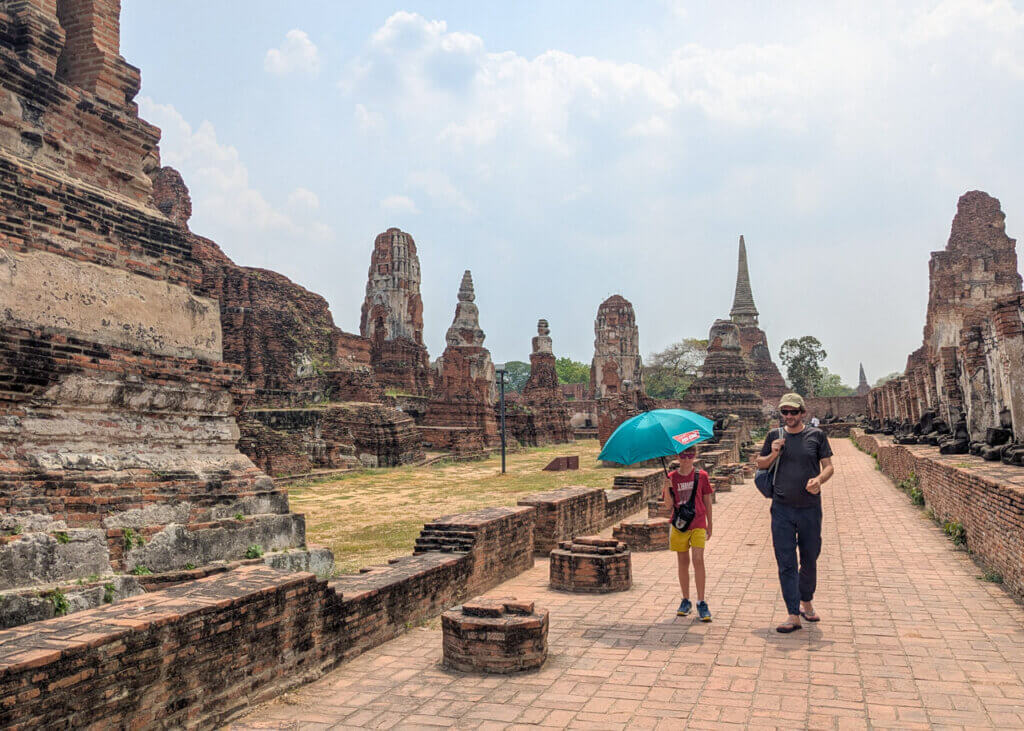
Ayutthaya is an easy and rewarding day trip from Bangkok, giving a completely different feel from the capital. The ruins are spread out, so having transport makes the experience far more enjoyable, especially in the heat. If visiting with children, it helps to keep expectations relaxed; rather than trying to see every temple, focus on a handful of impressive sites, leave time for snacks and shade.
We returned on the 4.41pm train, arriving back in Bangkok at 6.00pm.
Day 4-6: Kanchanaburi
Where we stayed: The Bridge Residence Hotel – two adjacent rooms (double and twin)
READ OUR GUIDE: Visiting Kanchanaburi with kids
A three hour train journey west from Bangkok, Kanchanaburi is a riverside province known for its dramatic scenery and powerful wartime history.
This area is closely linked to the construction of the Thailand–Burma Railway during World War II, often referred to as the ‘Death Railway‘. Built under Japanese occupation using forced labour, including Allied prisoners of war and forced Asian workers, thousands lost their lives in extremely harsh conditions.
Today, that history is preserved through a number of accessible sites across the region, offering families a thoughtful way to learn about this period alongside time spent in nature.
Beyond its history, Kanchanaburi is also one of Thailand’s most scenic regions; with jungle-covered hills, river landscapes and nearby waterfalls that make it an interesting contrast to Bangkok and Ayutthaya.
Day 4: Getting to Kanchanaburi
After a relaxed morning (brunch and family massages), we took the 1.55pm train from Bangkok’s Thonburi Railway Station to Kanchanaburi. This was a hot and sweaty train journey lasting two and a half hours.

Once checked into the hotel, we enjoyed a swim in the pool and then dinner at the restaurant across the road.


Day 5: An introductory history lesson
We hired some (rather shoddy) bikes from our hotel for THB50 per person. You can’t expect too much for that price, but they were good enough to get us between the main sights around town. They also provided a few comedy moments, with chains slipping off and Jay cycling with his knees practically up by his ears.
Our first stop was the Death Railway Museum, which offers an important introduction to the region’s dark history. The museum explains the Japanese occupation of Thailand during WWII and the appalling conditions endured by POWs who were made to build the Thailand-Burma Railway, later known as the Death Railway.
Directly across the road is the Kanchanaburi War Cemetery, where row upon row of gravestones provide a stark reminder of the young ages of many soldiers who suffered here and never returned home.


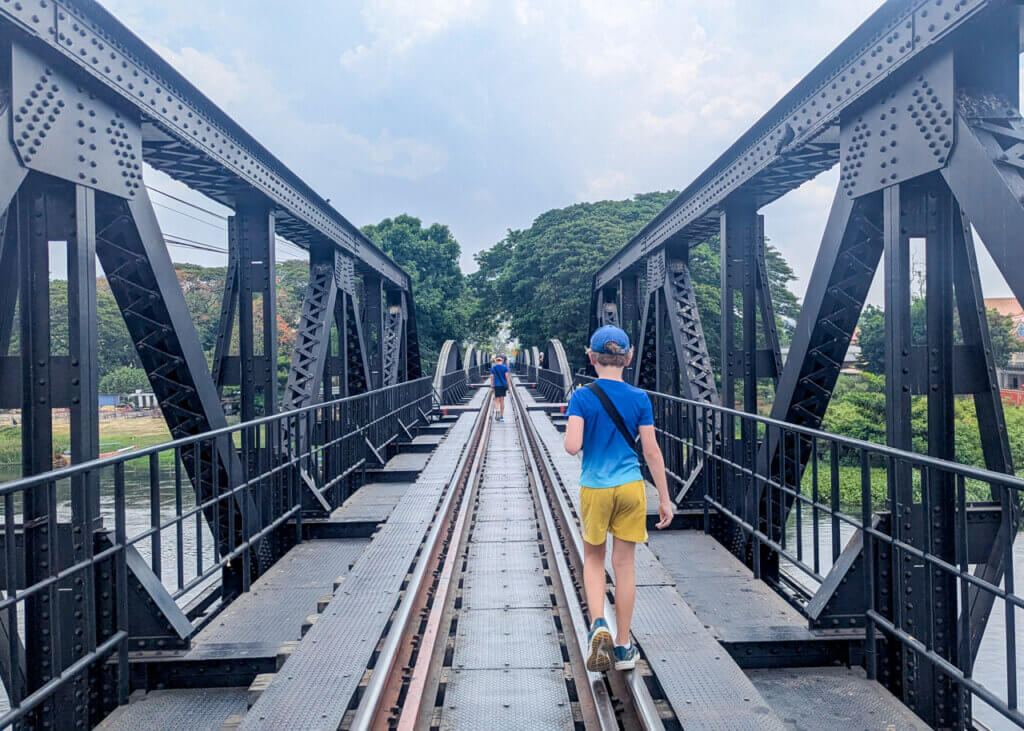
We then cycled to the other end of town to visit the famous Bridge over the River Kwai, made internationally known by Pierre Boulle’s novel and the later Oscar-winning film. There are plenty of stalls here for a cold drink or snack before walking across the bridge itself. On the far side, a boatman approached us and offered a 30-minute trip down the river for THB600, which we gladly accepted as we were in need of the cooling river breeze.
That evening, we headed to Walking Street; a long riverside stretch of market stalls selling food, drinks, and nick-nacks. It had a distinctly local feel, with very few tourists around, which suited us perfectly.

Day 6: Erawan National Park
READ OUR GUIDE: Visiting Erawan National Park with kids
We arranged a songthaew (a large tuk-tuk) to take us to Erawan National Park, just over an hour from Kanchanaburi.
Erawan is one of Thailand’s most popular national parks, famous for its seven-tiered limestone waterfalls. A footpath follows the river past each level in turn. The lower section is fairly easy, but the trail becomes steeper the higher you climb.
You can swim in the pools throughout the park, but all swimmers must wear a lifejacket. Pick one up near the Waterfalls 1 and 2 area before heading in. Lifeguards enforce the rule, and lifejackets cost THB20 per person through a convoluted coupon system.
READ: Visiting Erawan National Park with kids
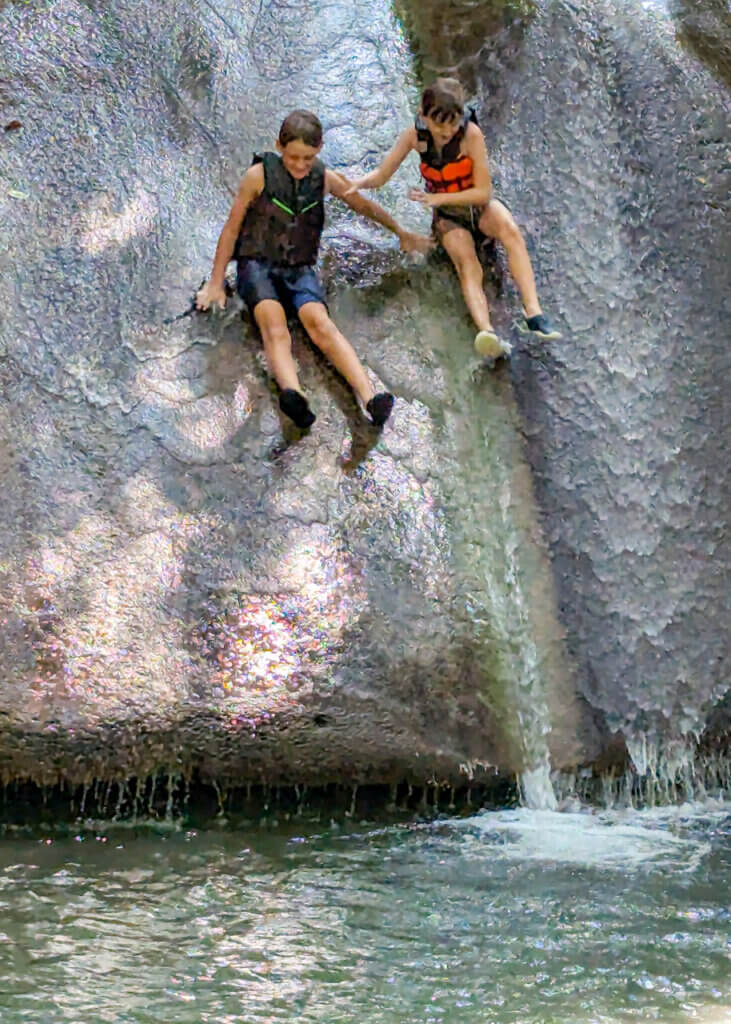


Waterfall 4 was the highlight for our boys, with two large boulders providing natural slides into the pool. Waterfall 3 was also great fun, where you can stand beneath the falling water. The higher levels were less suited to swimming, while the lower two were busiest as golf buggies can take visitors there without the walk. Do note that there are fish in the pools that sometimes nibble your feet, but if you keep moving they tend to leave you alone.
We spent around three to four hours here. There is no food or water beyond the Waterfalls 1 and 2 area, so take enough supplies with you, especially if heading to Level 7. Afterwards, there are food stalls outside the main gate by the car park.
If possible, visit midweek, as weekends can be very busy.
Day 7-8 Jungle Rafts
Where we stayed: River Kwai Jungle Rafts – a family room (two double beds)
READ OUR REVIEW: River Kwai Jungle Rafts
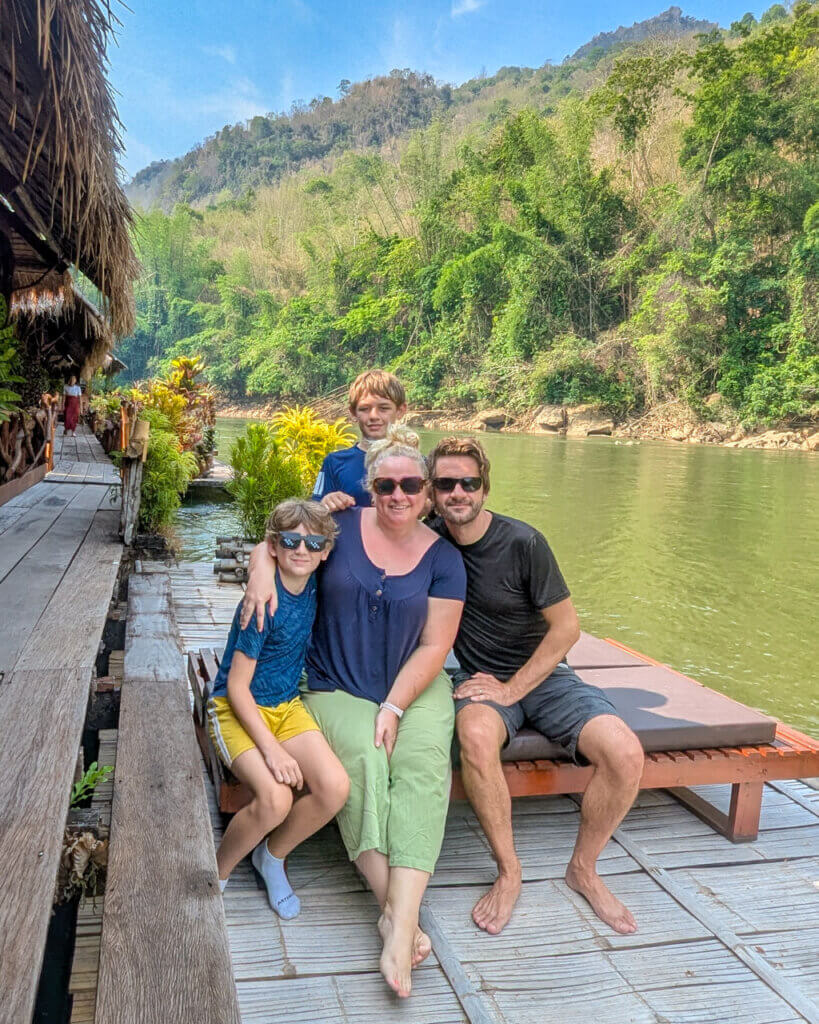
We then moved on to River Kwai Jungle Rafts, a floating jungle retreat accessible only by boat. Jay and I had stayed here 20 years ago (pre-kids) and it was great to return here and see that it had maintained its off-grid vibe.
There’s no electricity in the rooms, which means no WiFi and no fans or air-conditioning, so the nights aren’t the most comfortable. There are charging points and weak WiFi at reception if needed, but the whole point here is to disconnect.
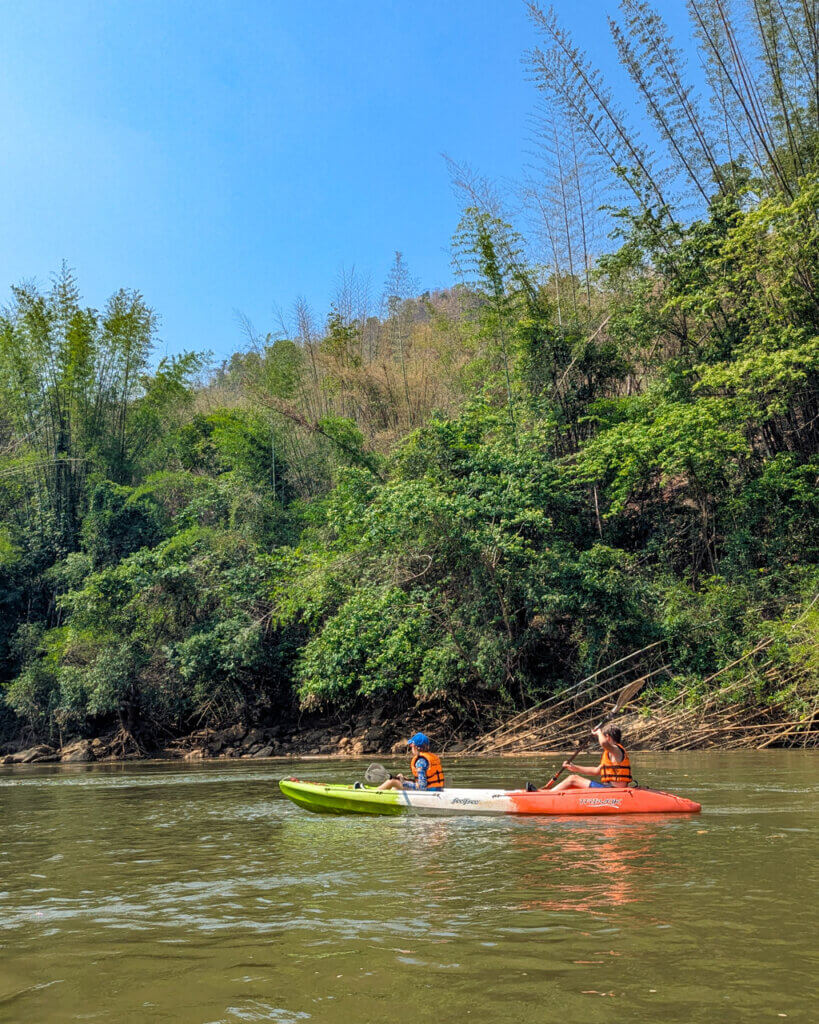
We spent two fantastic days switching off completely; jumping into the river, swimming, canoeing, reading, and just hanging out. It was the perfect way to wind down this Thailand trip.
If you need a place with aircon, we suggest staying at the nearby The FloatHouse River Kwai, although they don’t offer family rooms. Alternatively, the River Kwai Resotel (which is the sister resort to River Kwai Jungle Rafts) offers family rooms with aircon, but these are in landed huts, not floating on the river.
Day 7: Death Railway, Hellfire Pass, river swimming
Before arriving at River Kwai Jungle Rafts (boats don’t depart until 2.00pm unless you pay extra), we took the 10.30am train from Kanchanaburi to Nam Tok, the end of the line (1 hour 35 minutes). This is one of the best train journeys in Southeast Asia; windows down, jungle views streaming past, yet a constant reminder of the harsh conditions under which this railway was built. Make sure you sit on the left hand side of the carriage for the best views!
READ: Riding Thailand’s Death Railway

Most visitors (tour groups) disembark earlier along the route at Thamkrasae, just past the iconic Death Railway Thamkrasae Bridge, but we continued all the way to Nam Tok and had almost an entire carriage to ourselves, with some of the best scenery coming in the final stretch.
From Nam Tok, a songthaew drove us the 20 minutes to Hellfire Pass Interpretive Centre. This is a deeply moving section of the Death Railway cutting, carved through solid rock by Allied prisoners of war and Asian labourers under brutal conditions during World War II. The site is maintained with Australian funding, and the museum and audio guide place strong emphasis on the Australian POW story, which is powerful but feels incomplete given the many other nationalities who also suffered and died here.


We stopped for lunch at the restaurant opposite before continuing by the same songthaew to Phutakien Pier for 3.00pm. The total songthaew cost was THB800.
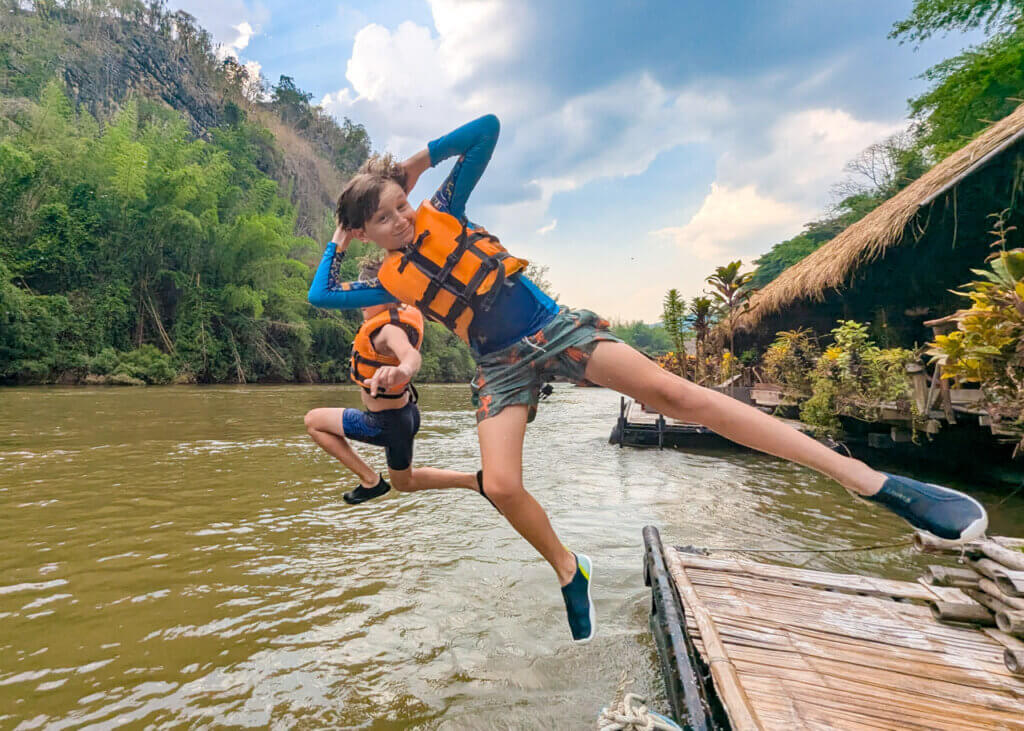
From there, a private longtail boat took us 20 minutes upstream to River Kwai Jungle Rafts, where we checked into our floating room. Almost immediately, we grabbed lifejackets and headed into the river for a swim (or rather a drift). The rafts are strung in a long line; you jump off one end, let the current carry you along, then climb out and walk back along the rafts to repeat it. It’s great fun but best suited to confident swimmers.
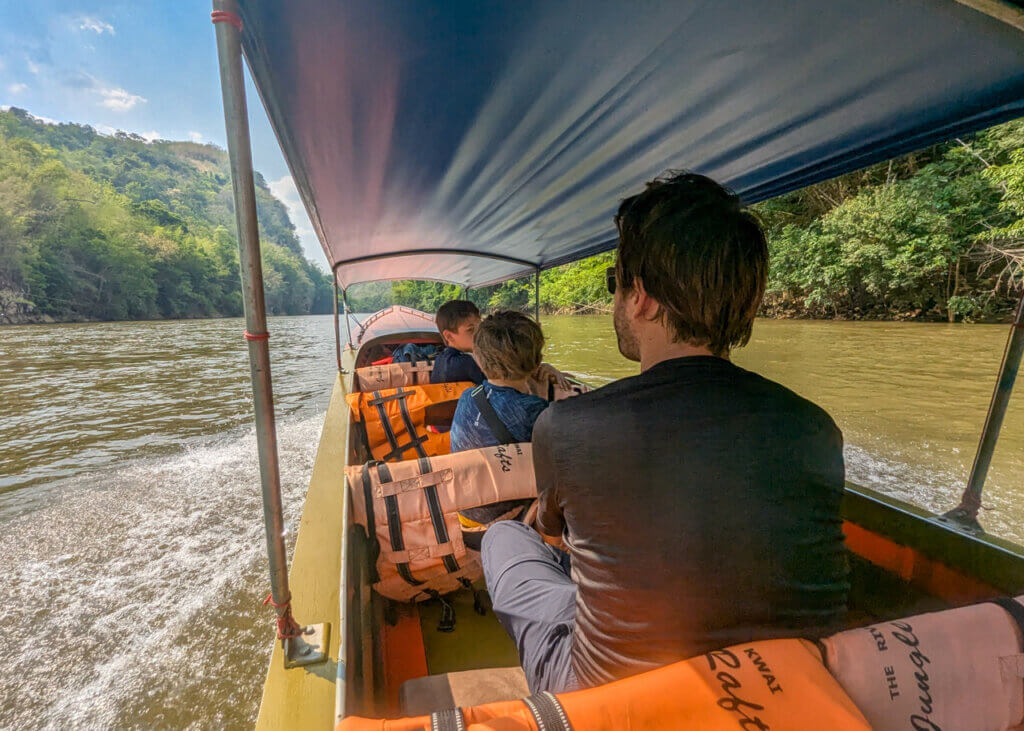
Dinner and breakfast are included at Jungle Rafts. Diner is served early at 6.30pm, which suits most families. The food is simple, local, and very good.
Day 8: Canoeing, Mon village, relaxing river time
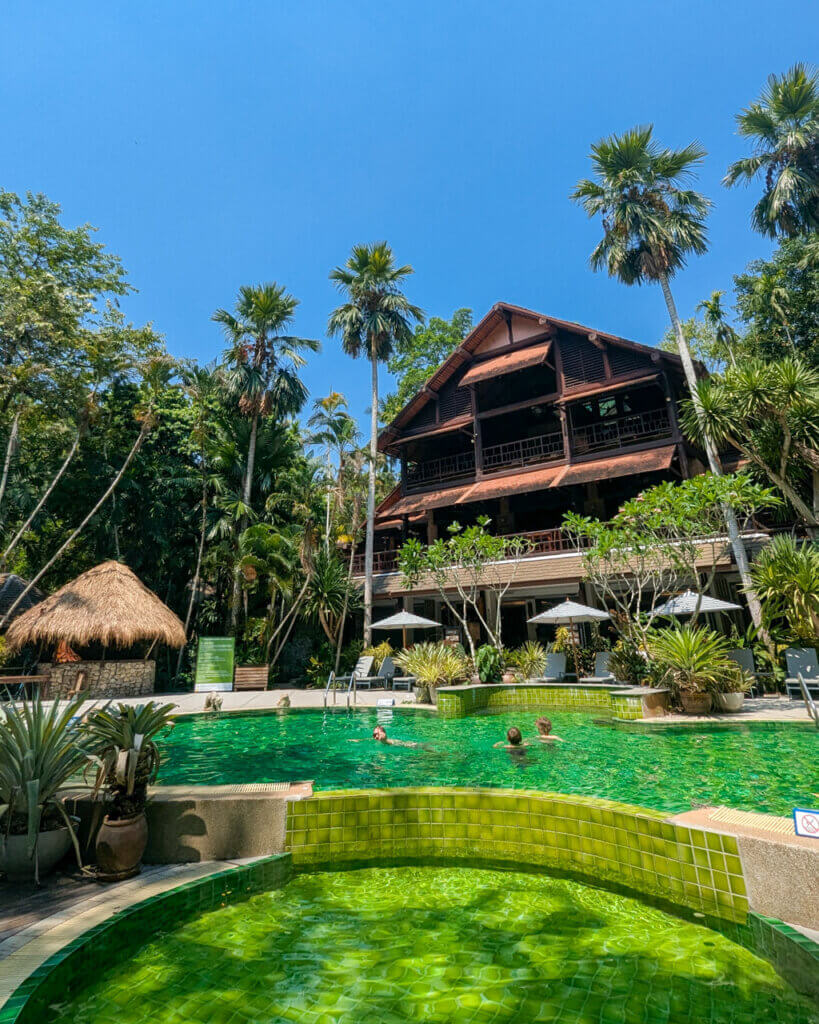
Our most relaxed day of the trip, and the last before heading home. In the morning we hired canoes (THB1500 per canoe) and paddled downstream to the sister resort, River Kwai Resotel, where we made the most of the swimming pool before taking a longtail back to the rafts.
Back at Jungle Rafts, it was all about slowing down; reading in hammocks, more river play, and plenty of time just watching life on the water go by. But we did make time to wander into the nearby Mon village, home to the Mon community with their own distinct culture and language.


Day 9 Return to Bangkok
From Kanchanaburi, we returned to Bangkok by private minivan arranged through River Kwai Jungle Rafts. It cost THB4500, but the three-hour journey was far more convenient than taking the 7.00am train from Nam Tok back to Bangkok.
It also gave us a couple of extra hours in the city to enjoy a drink, grab something to eat, and mooch around Rambuttri Road and Khao San. We even managed to squeeze in a last-minute foot massage before boarding the overnight sleeper train back to Malaysia.


Final thoughts
We’ve visited Thailand countless times as a family, and this trip ranks as possibly our best yet. We loved the variety of activities and the ease of travelling by train. There were no long travel days or overly early starts, yet we still managed to pack in so much.
If you wanted to extend the itinerary, it works really well as a springboard down to one of Thailand’s islands, with the best choice depending on the season.

You may also like to read:
Thai island hopping with kids guide
Southeast Asia packing list for families
Southeast Asia with kids: our 10 week itinerary, budget, and tips